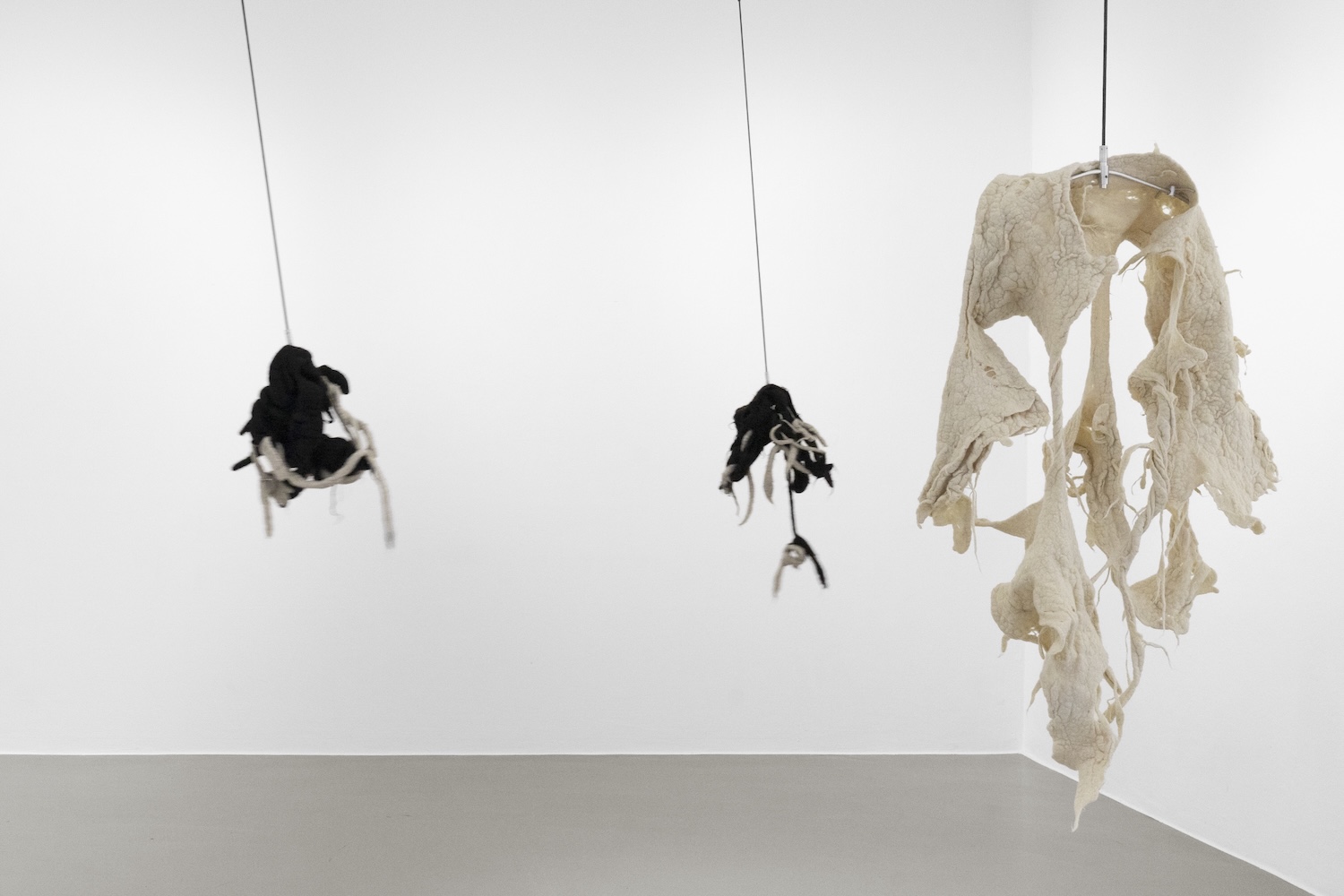
Hella Gerlach’s work revolves around communication and relationships as an interplay of various techniques. Physical touch is often central, as is the integration of various nonverbal abilities and modes of expression into a social space. What touches leaves traces: it provokes a response and forms a dataset that becomes inscribed in both technologies and bodies.
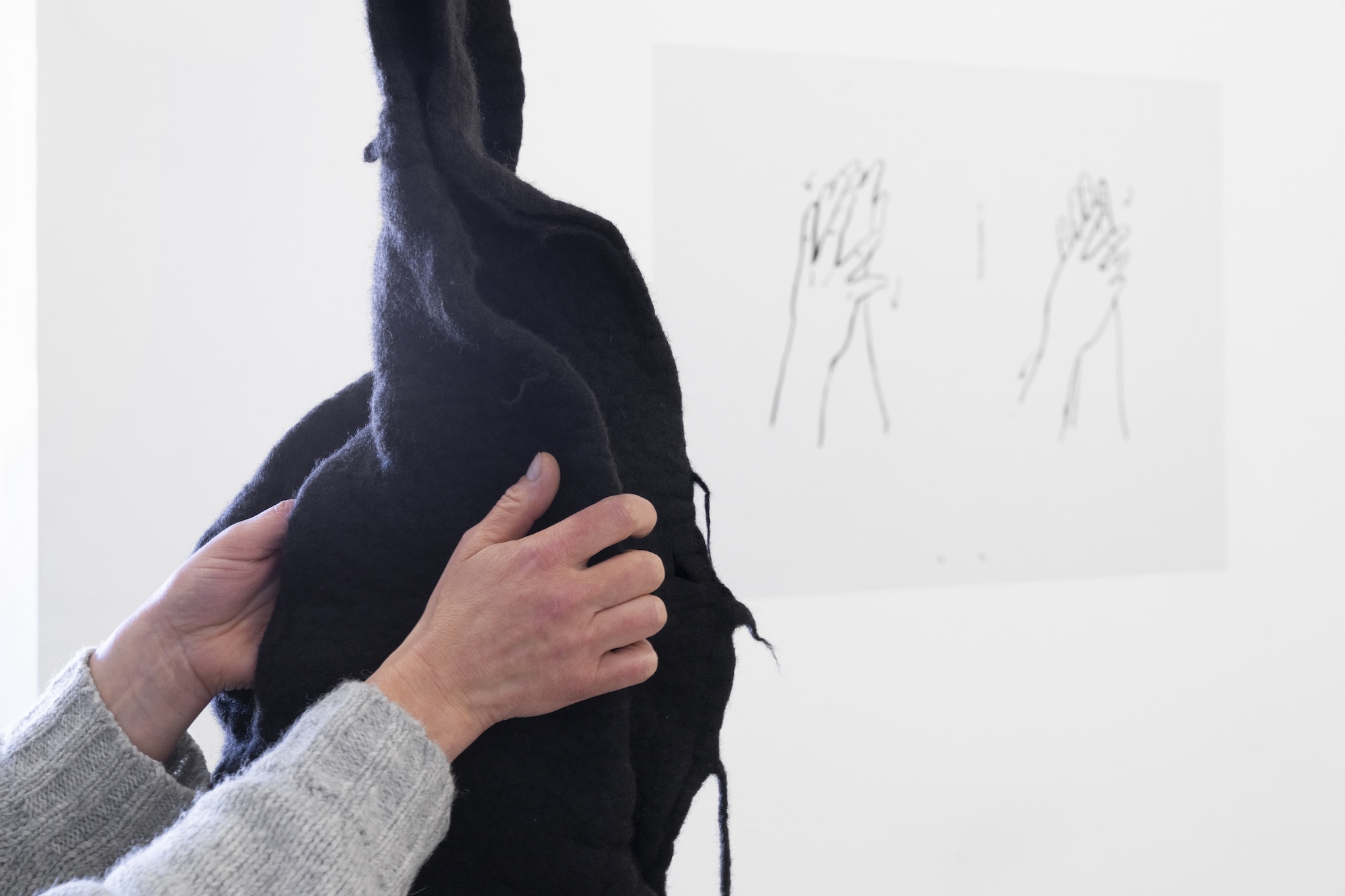
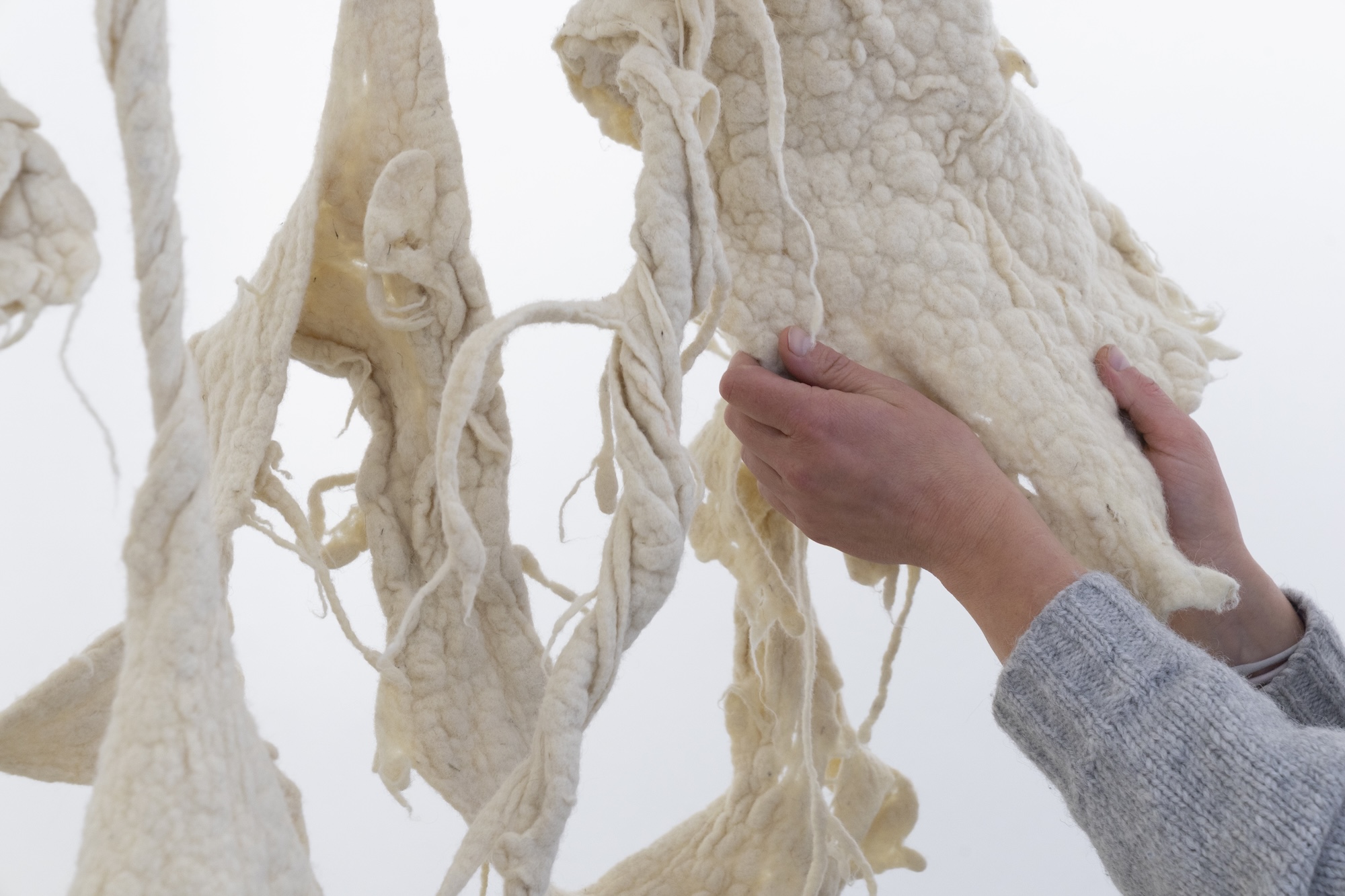
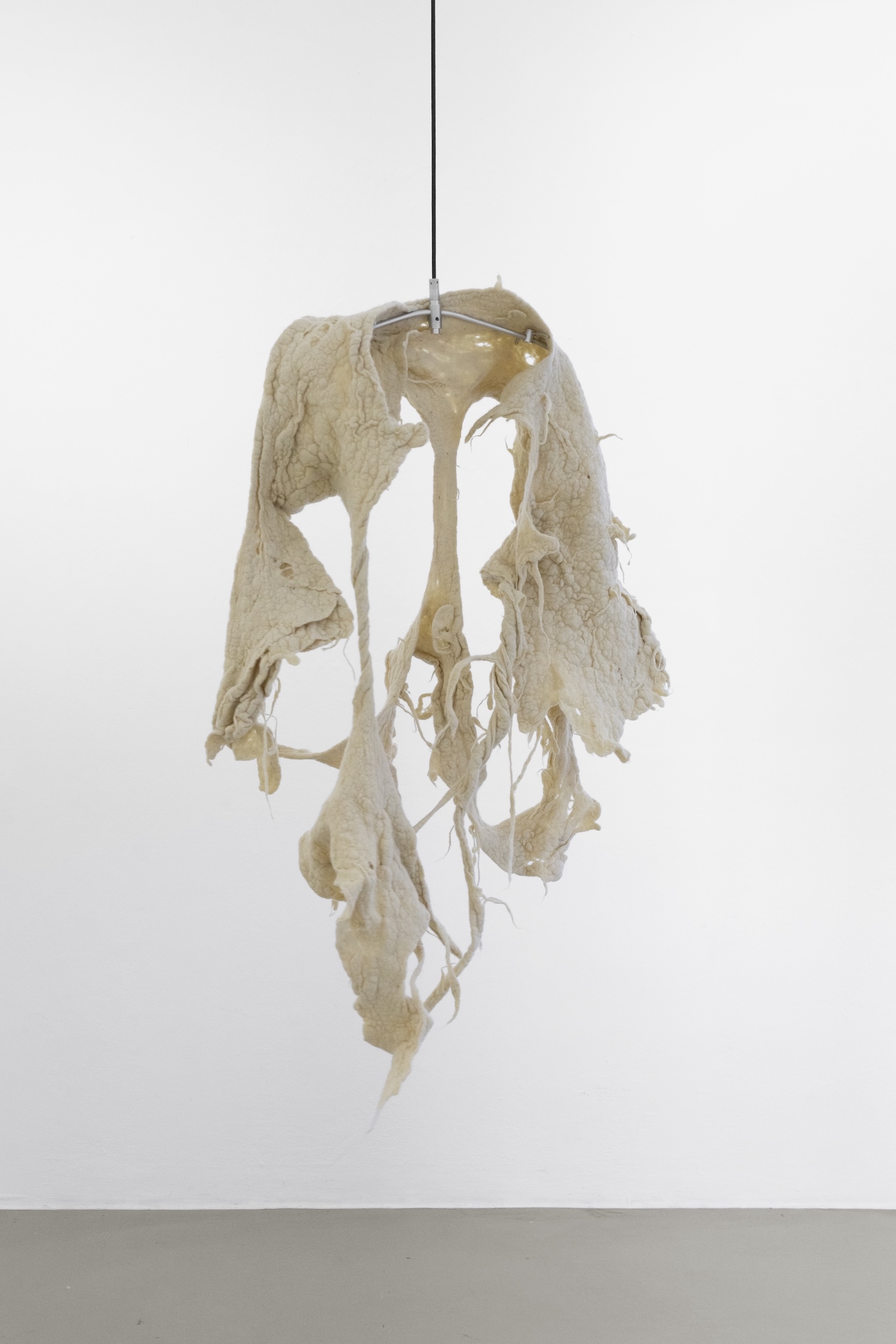
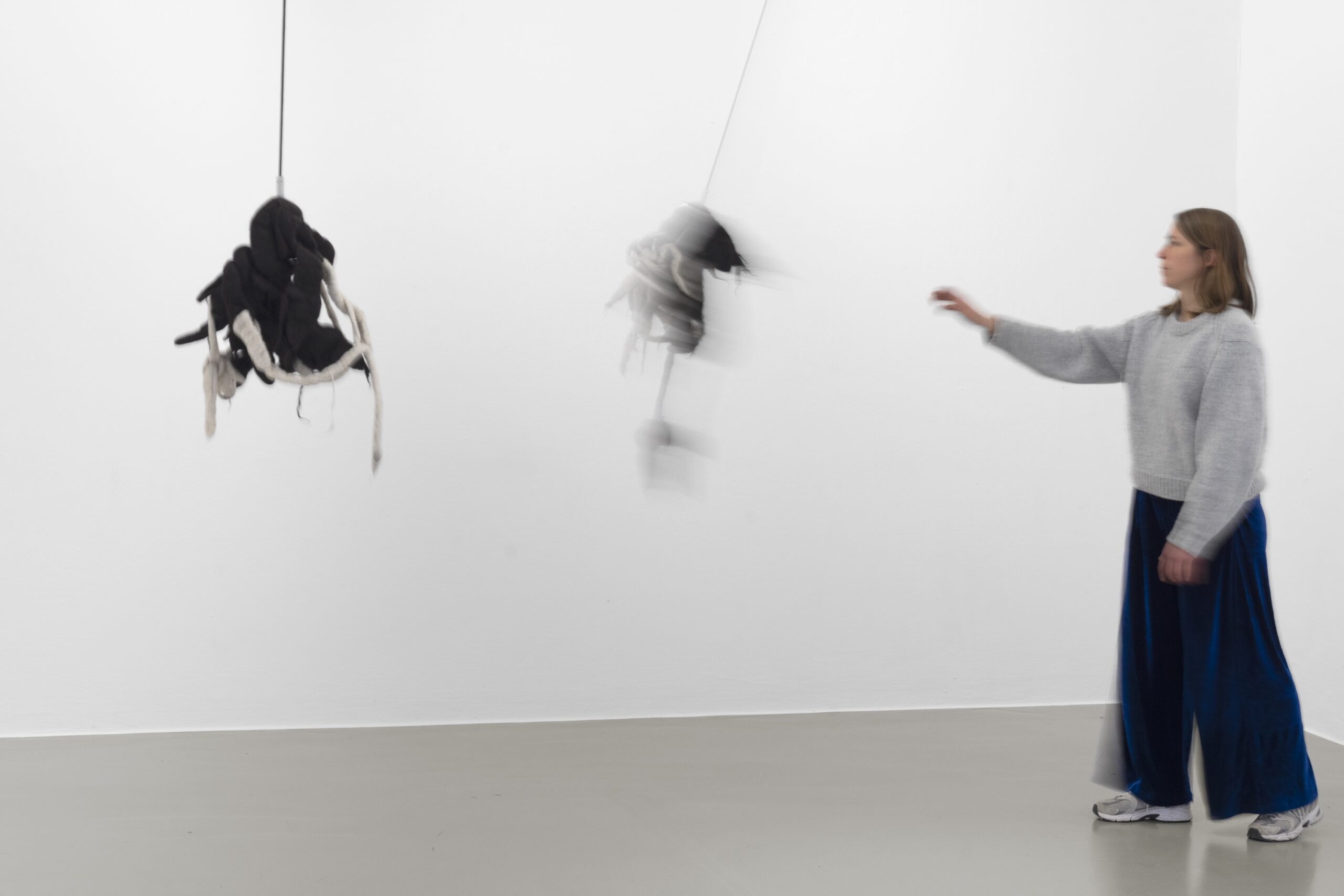
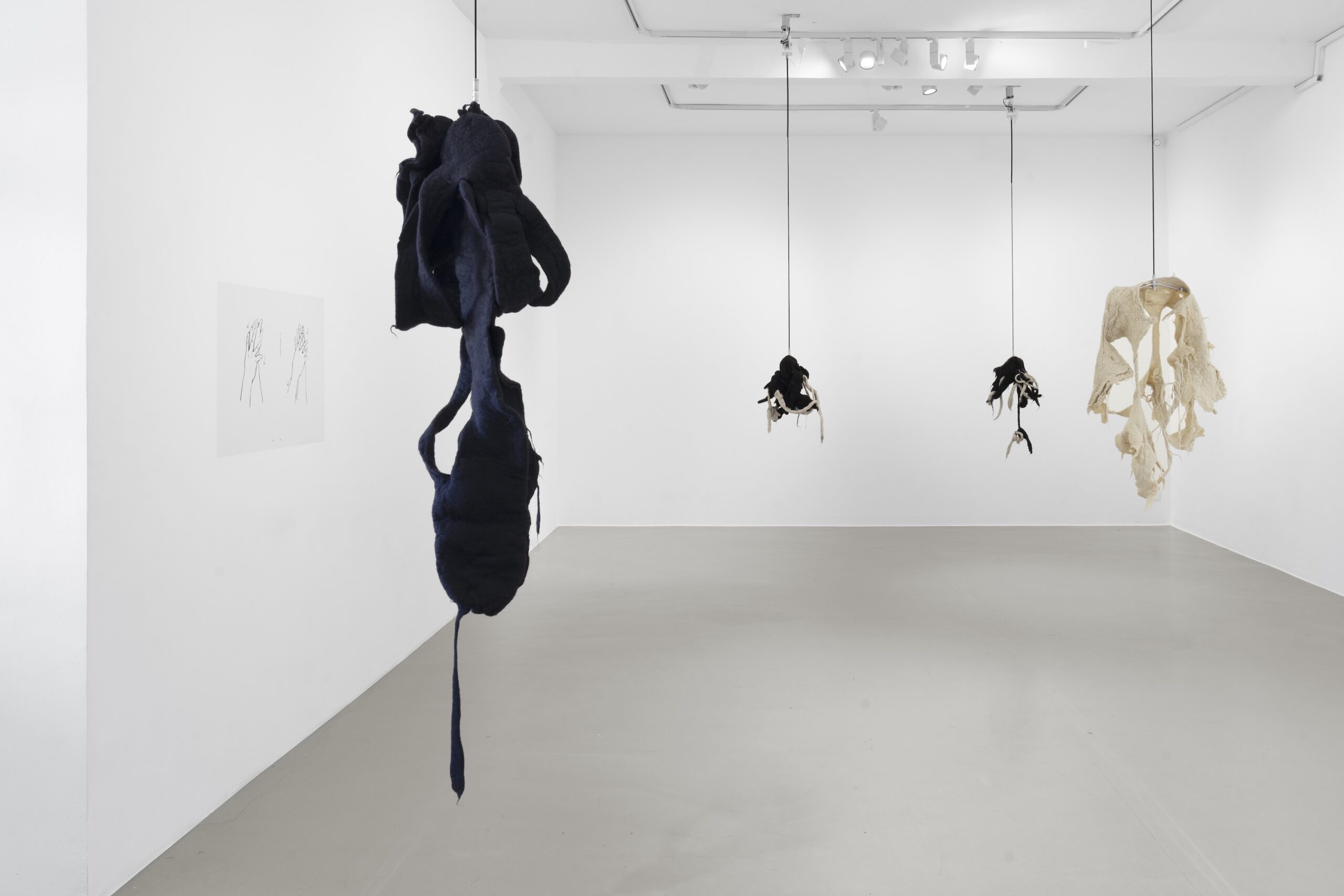
Large and small wool objects—modeled, washed, and further shaped by Gerlach—hang in the space on elastic cords. When touched, they are set into motion and produce feedback. One of the works on view consists of two parts and is equipped with technology that expands its range of responses. When one of the sculptures is activated, a communicative process unfolds between them: they gradually calibrate to one another, eventually oscillating in parallel before settling into a faint tremor. Inside-out is the title of this series of abstract, tactile objects. Each work includes, in parentheses, a subtitle referencing a specific organ of the body. Substantia nigra and cerebella refer to the brain, while dermis points to the skin. Through touch, these domains become closely intertwined, they act upon and shape one another.
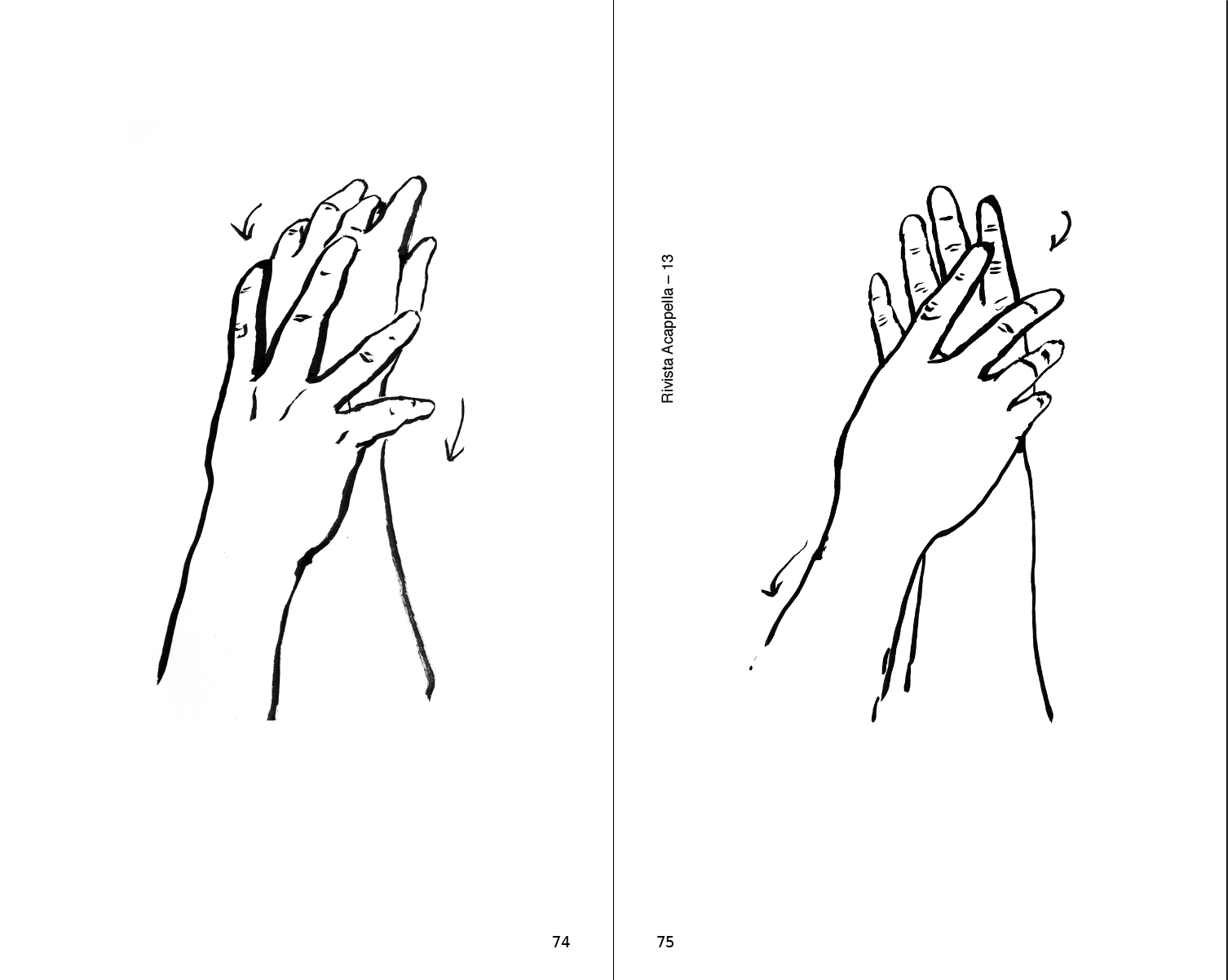
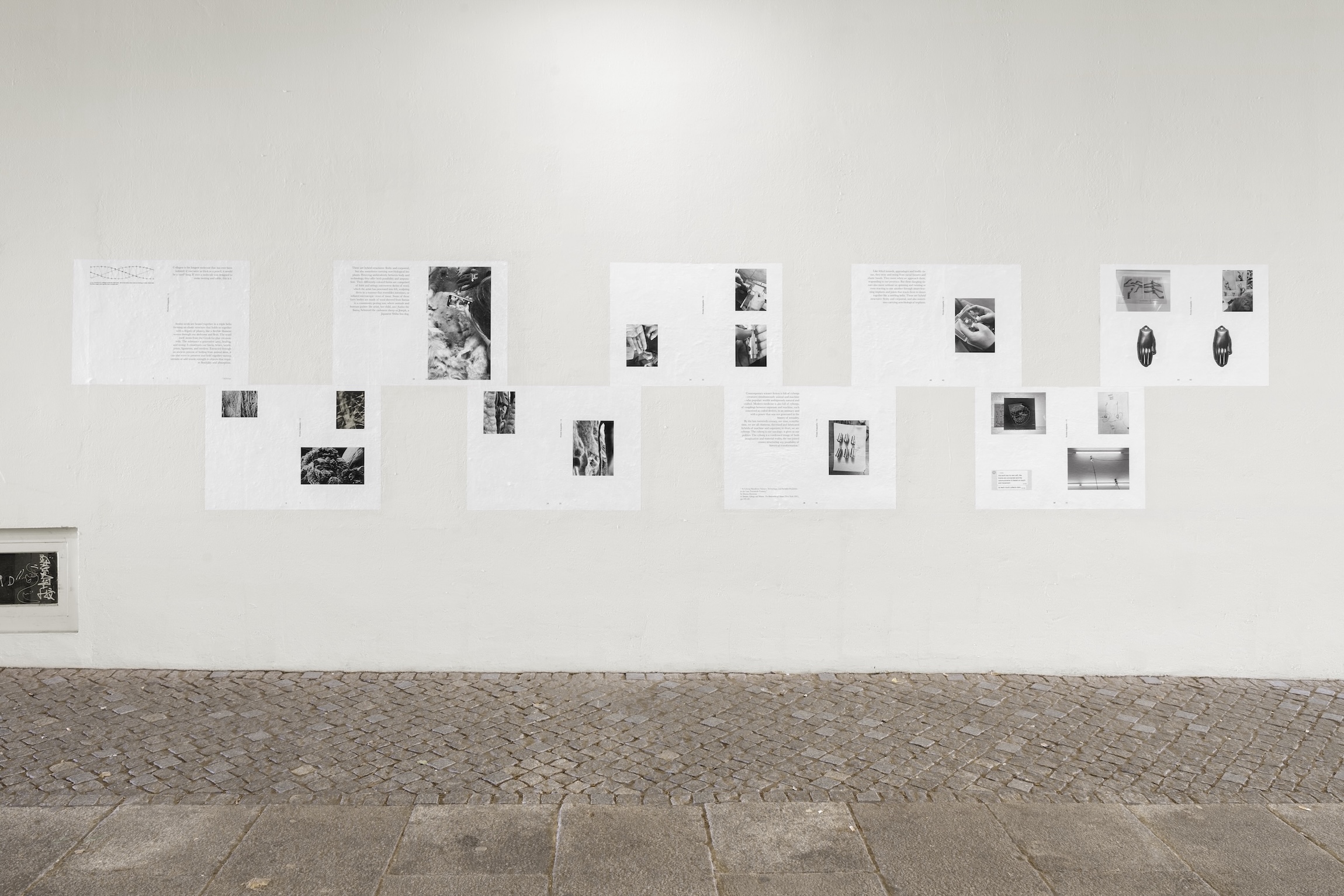
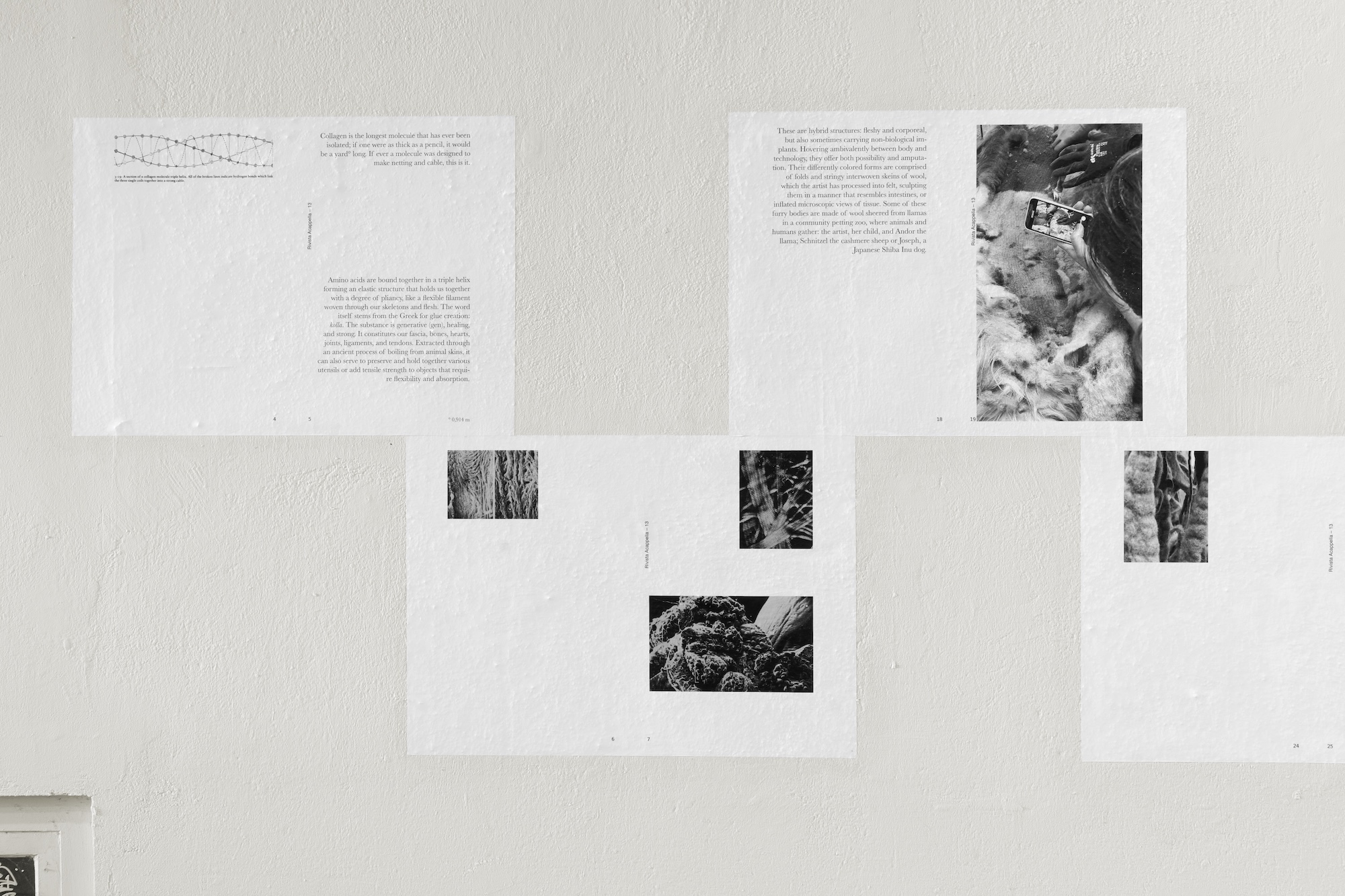
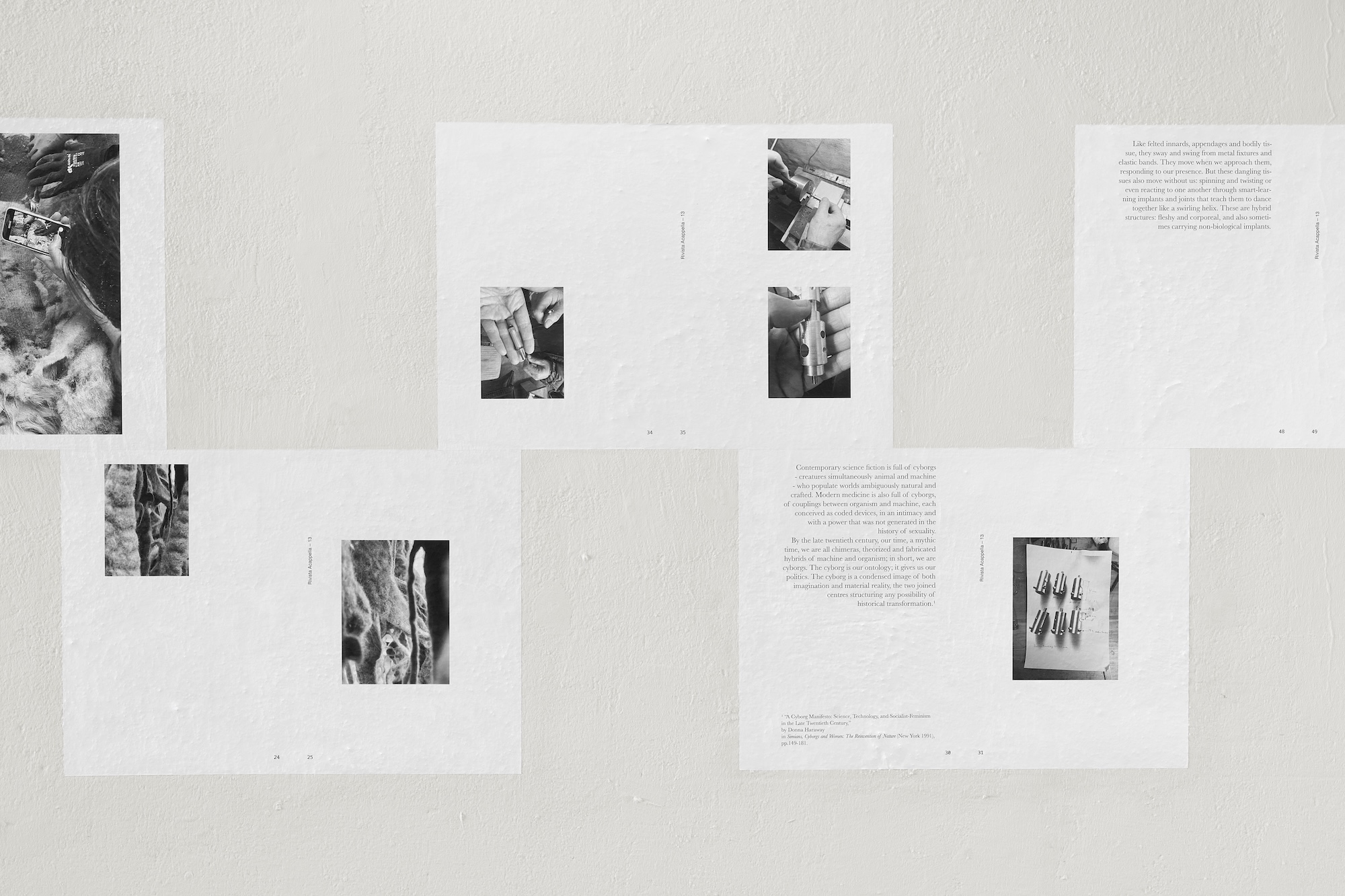
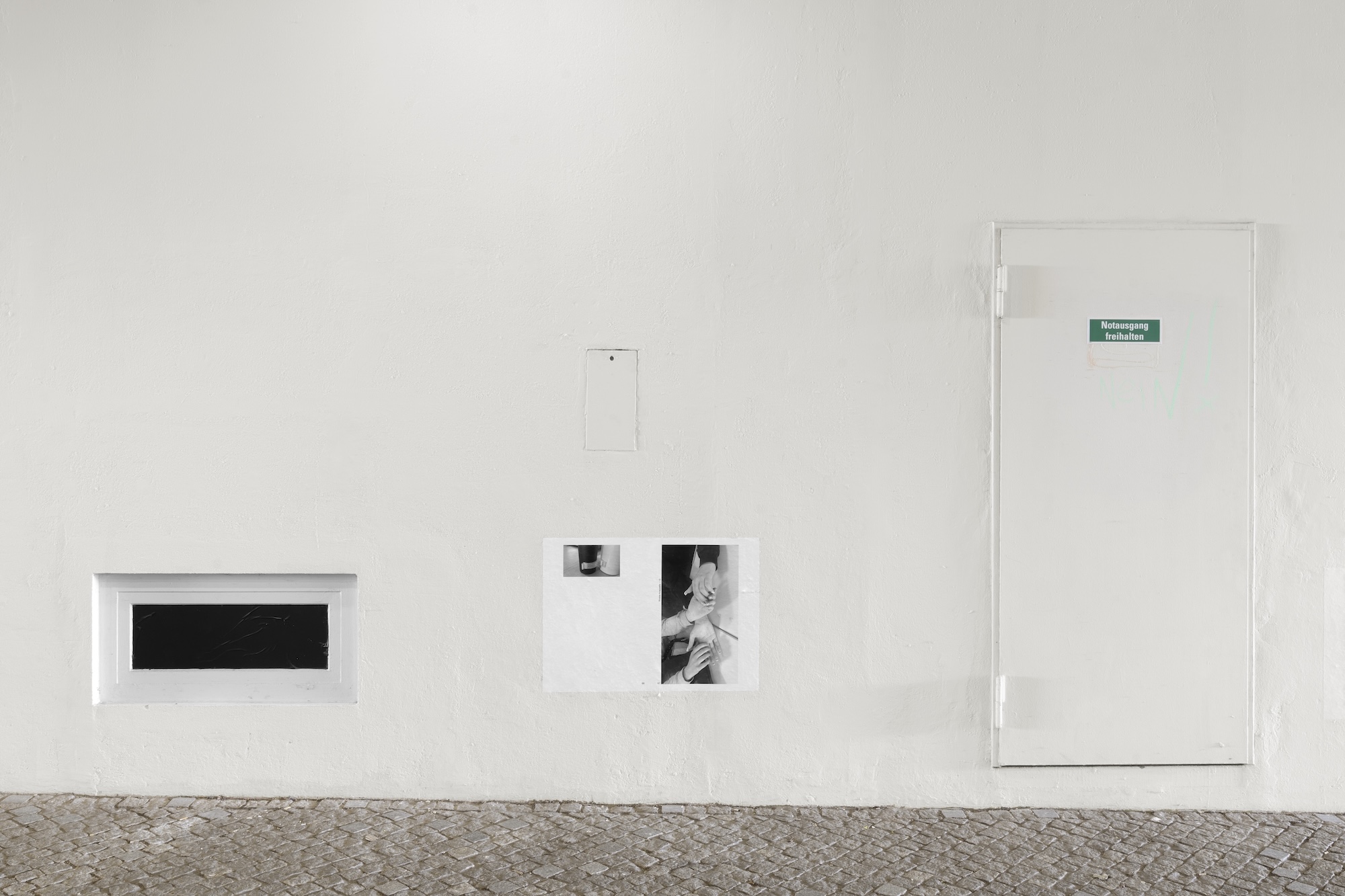
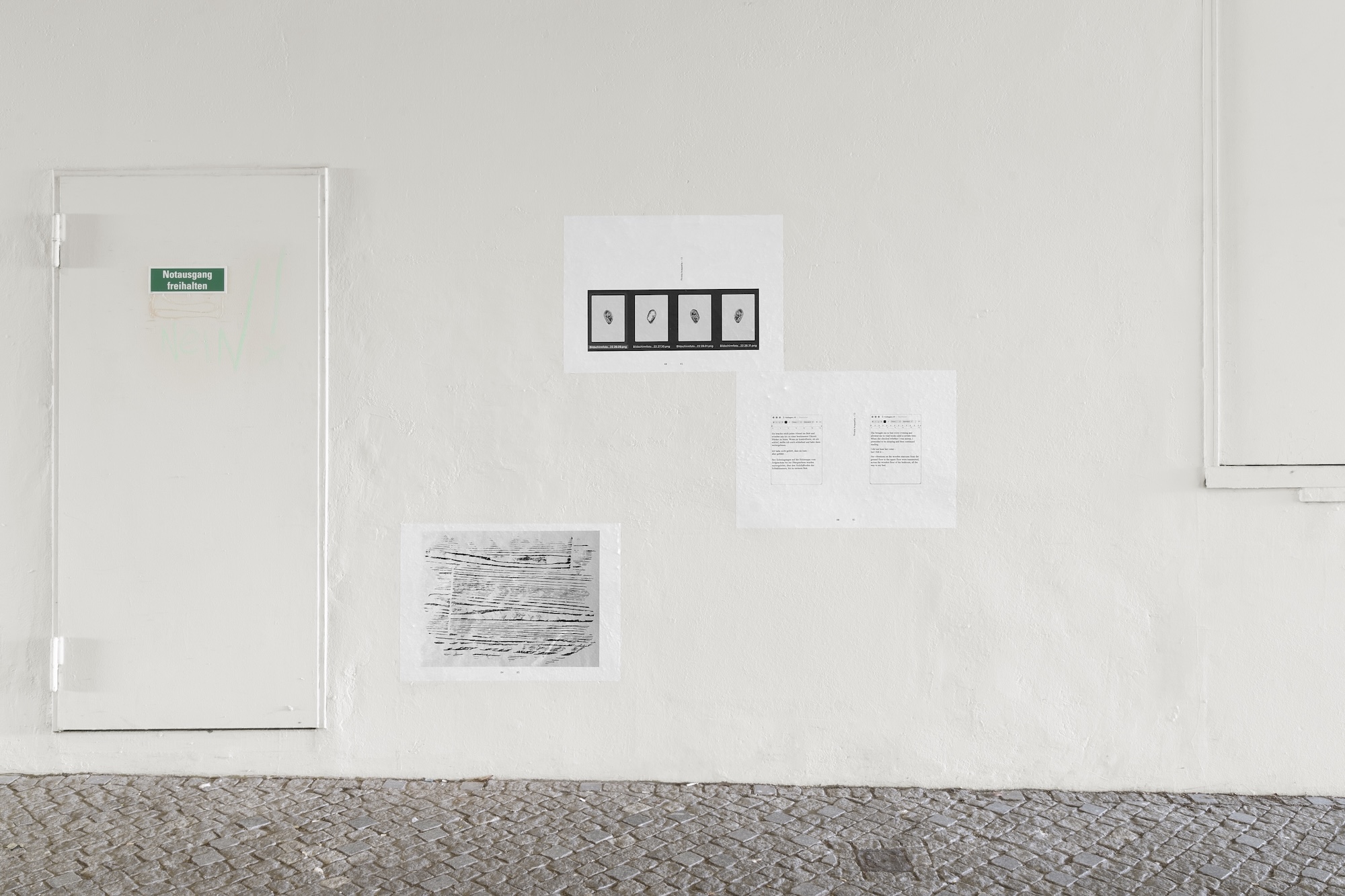
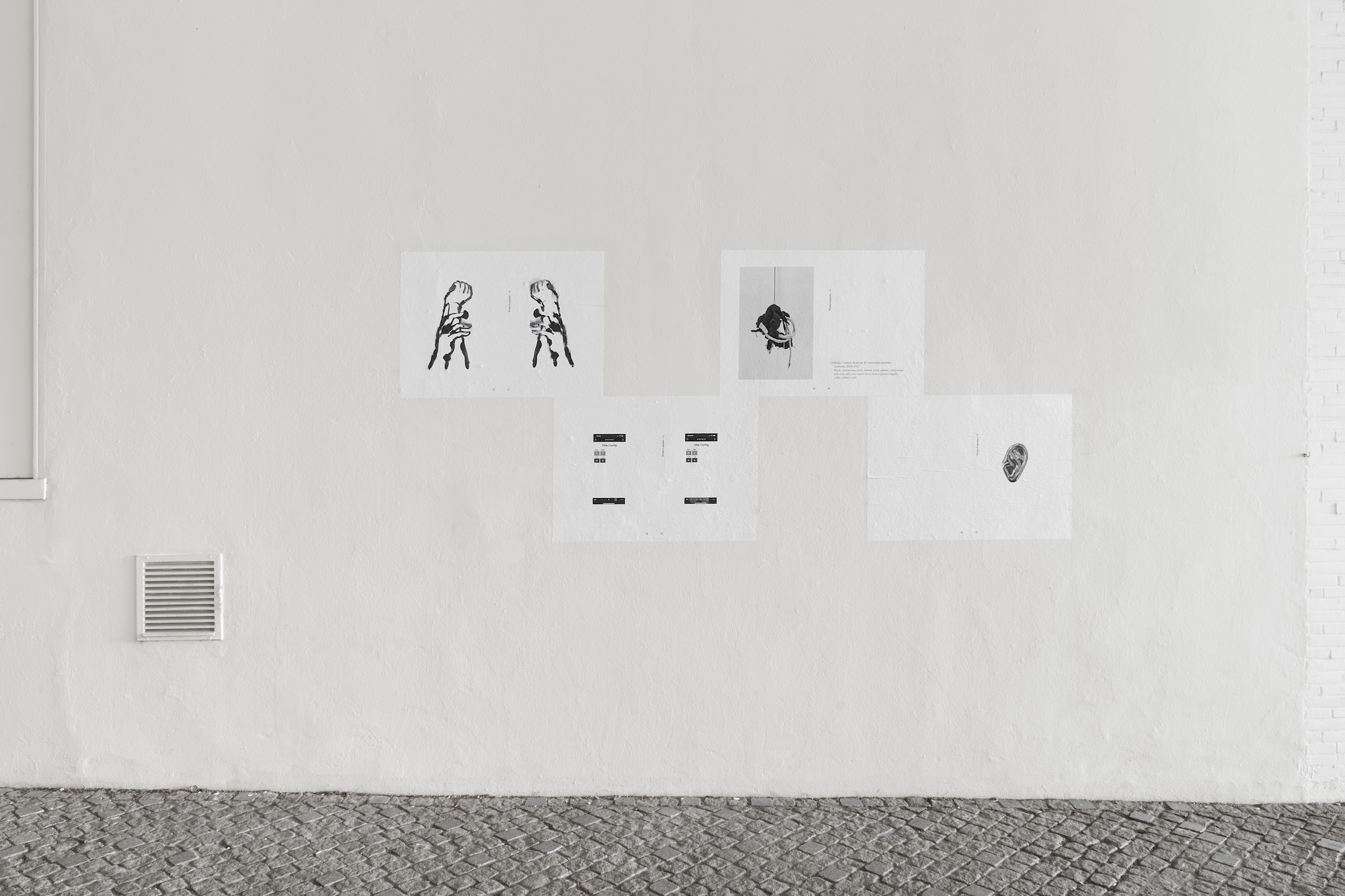
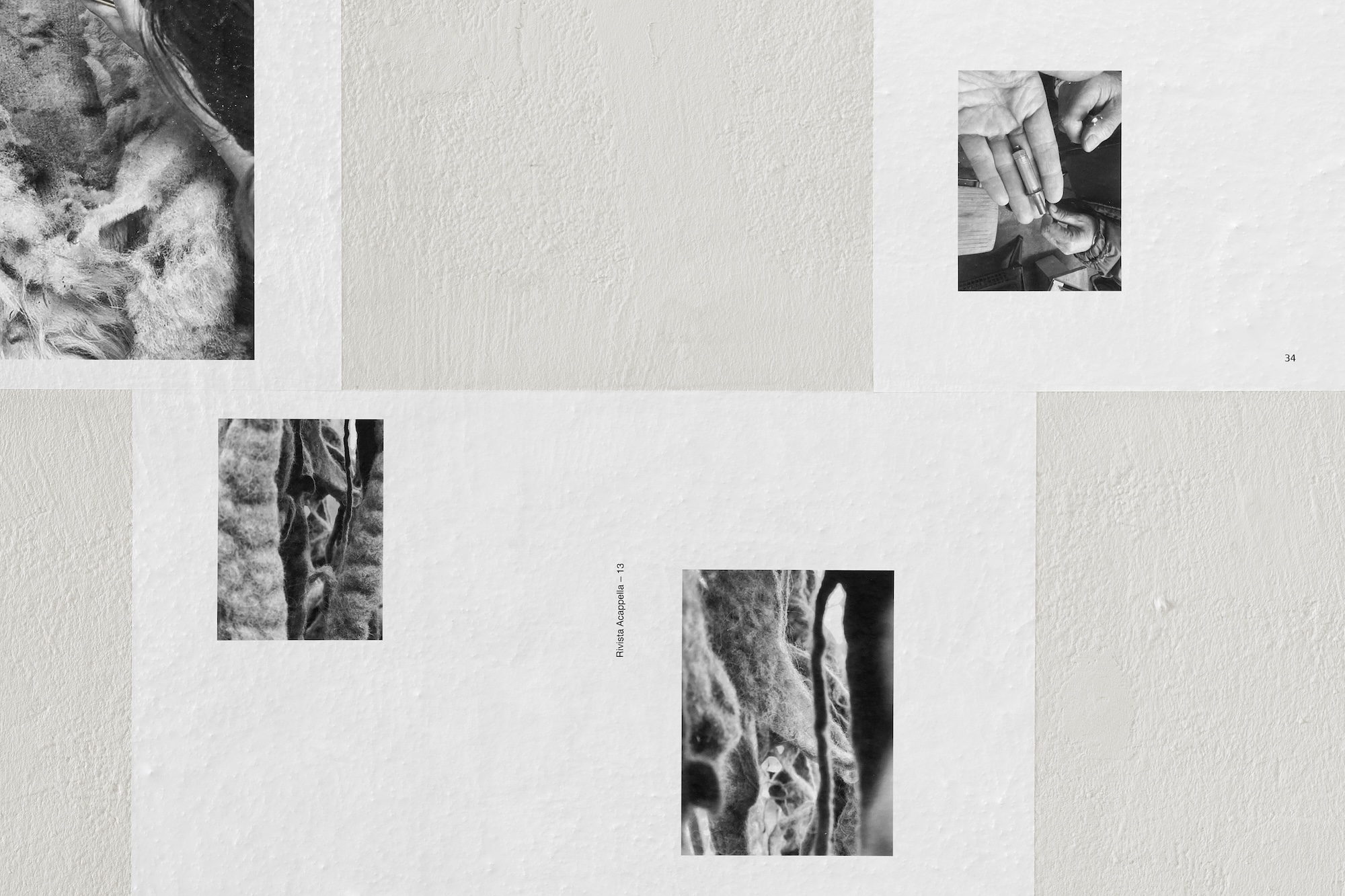
Touch is a communicative process that plays a central role in Gerlach’s lived environment. It can take the form of self-touch—for example, the hand gesture visible on the wall, often used within the autism spectrum to reduce sensory overload—as well as contact with materials or technologically mediated interaction. Gerlach’s objects explore this spectrum of touch and the nonverbal connections it generates, addressing domains that typically remain abstract and out of view, even as they profoundly shape our emotional lives and motor functions. Her knots and felted forms turn the interior outward, while also evoking highly magnified images of connective tissue. This imagery reappears in the second part of the exhibition, outdoors, where a text-and-image assemblage unfolds across the building’s façade in the form of posters. Drawing on pages from Gerlach’s current publication Collagen, it explores different modes of touch: through hands and ears, as well as through other techniques.
The arrangement of the posters follows the rhythm of footsteps, while also referencing connections and variations, including those found in molecules. The work is titled Inside-out #12 kollagen (spleiß-variante), in English Inside-out #12 collages (splice variant). In biology, “splicing” describes how regularity and variation are structured within genetic material. Gerlach extends this model to examine not only internal biological connections but also external social ones, exploring their scope and possibilities, integrating diverse needs, and developing alternative modes of communication. Accompanying the installation is a two-minute hum that regularly fills the tunnel. This hum is not merely a sound but a form of touch, its frequency producing a subtle vibration.
Each touch sets off a chain of sensory processes. Vibrations travel, transform, and pass through countless materials that are channeled, stored, and transmitted: as data, via Wi-Fi and AI, as well as through the fibers and tissues of skin, nerves, and the brain. With Spektrum, Hella Gerlach explores these different forms of communication and connection, while also examining the tensions and degrees of flexibility between body and technology, possibility and vulnerability.
Hella Gerlach (b. 1977, based in Berlin) studied, art history, archaeology and philosophy at the University of Cologne, interdisciplinary design at TH Cologne and experimental sculpture at the Kunstakademie Düsseldorf. Since 2010, Gerlach teaches art with a three-dimensional focus in various educational contexts. Her work has been shown in solo and group exhibitions, including ACAPPELLA Naples, AIL Vienna, Machina Loci, Berkeley, Østfold Kunstsenter, Norway, Künstlerhaus Bremen, Stations, Berlin, Kunstverein Jesteburg, Kunstverein Hildesheim/Roemer-Pelizaeus Museum Hildesheim, Kunstverein Braunschweig, Goethe Institut Glasgow, Garden City Club, Cairo, Kunstverein Schwerin/Museum Schloss Schwerin, STUDIO Berlin, KW Berlin, Kunstverein Hamburg, Mark Morgan Perez Garage, Buenos Aires, Bonner Kunstverein, Kunstverein Langenhagen, Kunsthaus Dresden, and Kunstpavillon Innsbruck.
Gerlach is a member of the Bossman collective (since 2021), initiator of the exhibition project DIE FUGE (2009-2012), editorial member of the first issue of the artist magazine SKULPI (2010), co-initiator of the mobile exhibition platform WHEELY (2005-2007), and curator in the collective of the Simultanhalle, Cologne (2003-2006).
Opening: March 20 2026, 7pm
The series for fear of continuity problems invites artists to play a game of ping-pong between the small bookshop at the GAK and the question of how memory, perspectives, narratives, identities, and the unconscious can be spatially represented and publicly negotiated. Julia Horstmann has designed a new bookshelf for the collaborative project based on the idea of the memory palace, a method for remembering using places and artifacts.
Funded by
Der Senator für Kultur der Freien Hansestadt Bremen, Liebelt Stiftung Hamburg, Waldemar Koch Stiftung, Sparkasse Bremen