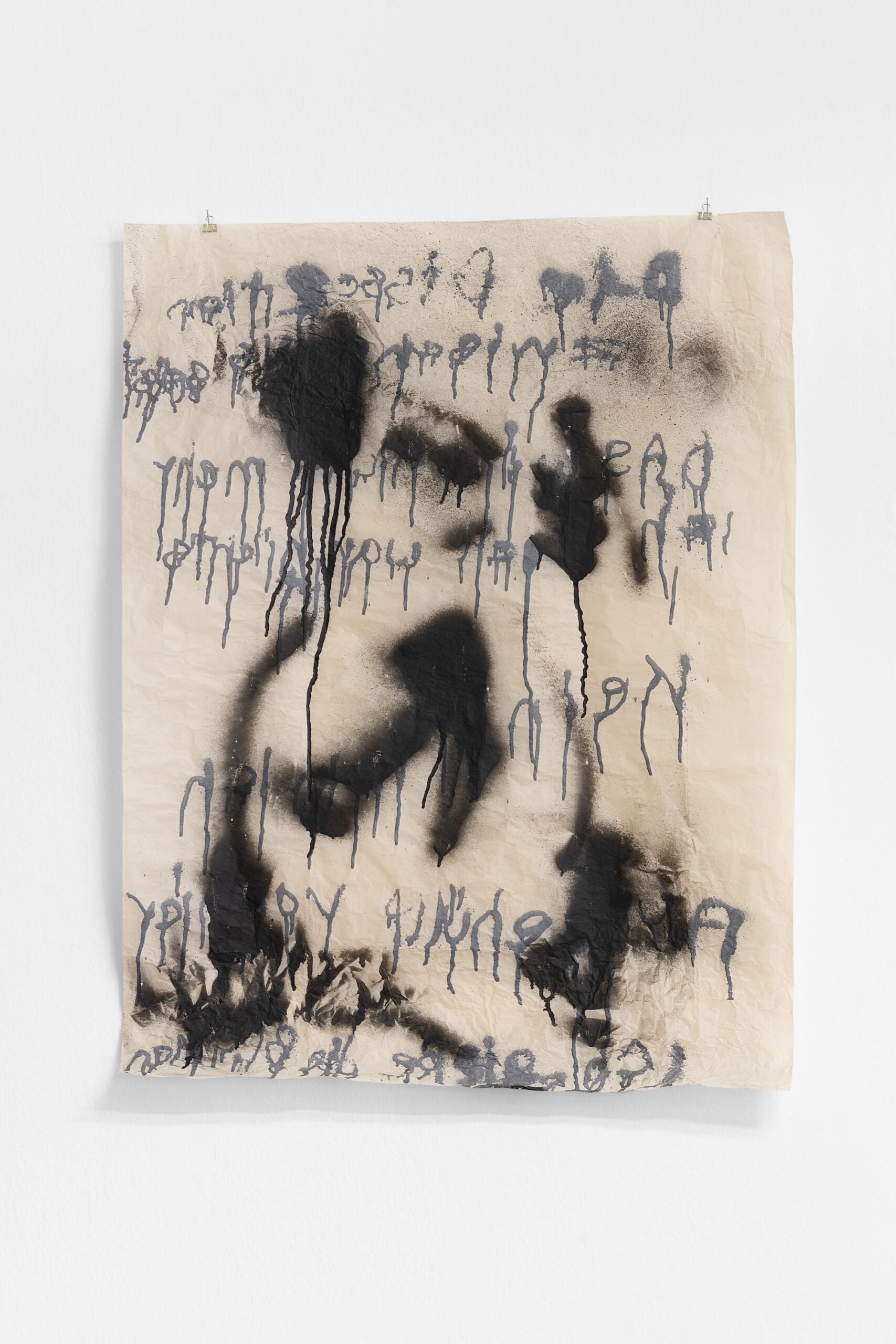
The group exhibition Produced on the Skin explores the interfaces and boundary zones that surround and shape us. Through the skin, the senses of sight and touch, the structure of our brains, as well as technical devices, clothing, and architecture, various kinds of membranes mediate between individuals and their environment. They process and respond to impressions. They shape how we behave, what we allow in and what we prefer to keep at a distance, what we protect ourselves from and what we actively engage with, and what we wish to project outward. The concept of shaping can be understood in a very concrete sense: influences change bodies, brains, and attitudes.
In the exhibition, we conceive of artistic practice artistic as a membrane that filters the relationship between self and environment, between language and material. The practices gathered in the exhibition negotiate these material boundaries and reflect on what is absorbed and in what form it is released again. They address questions of encrustation and permeability, withdrawal and liquefaction, proximity and distance.
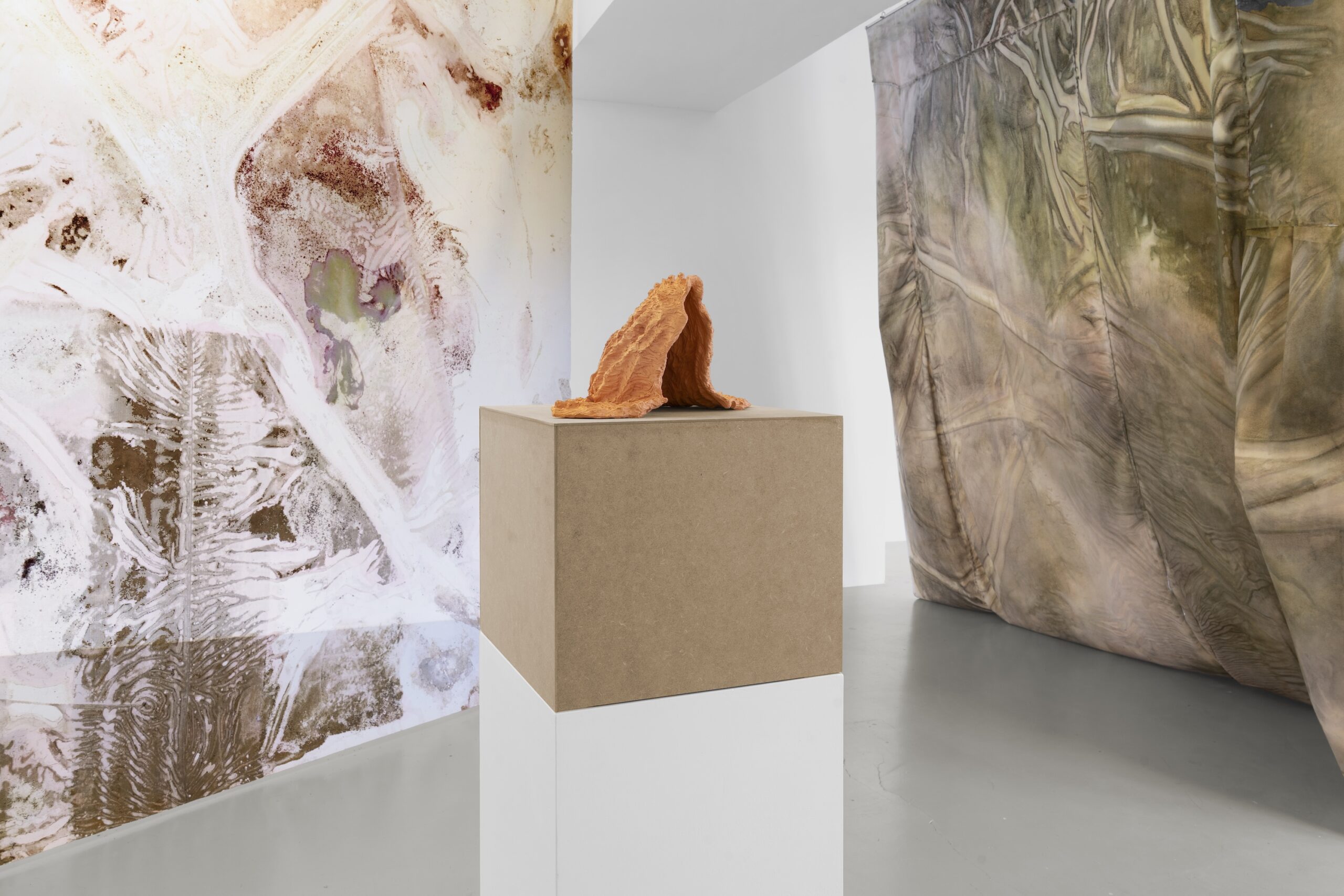
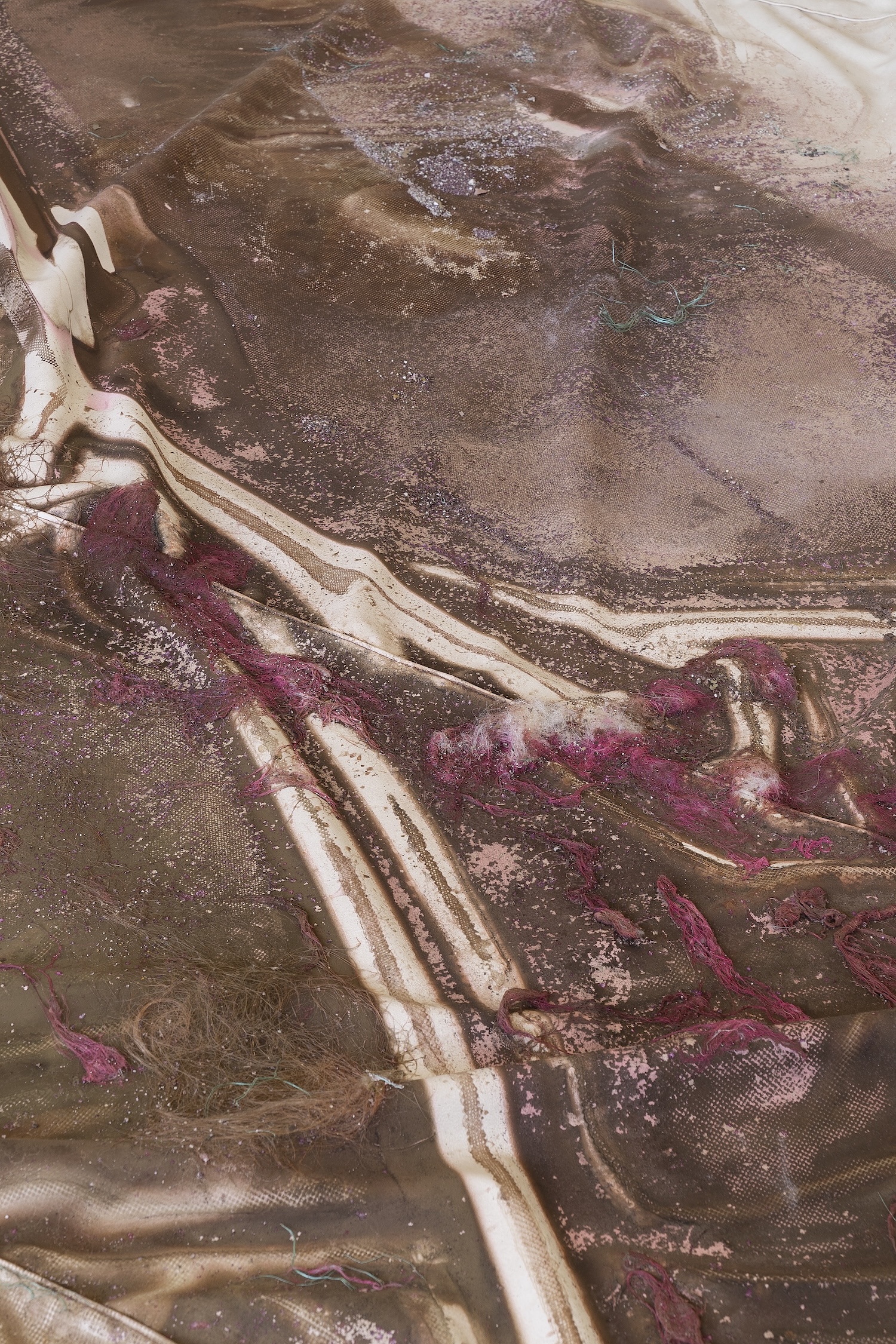
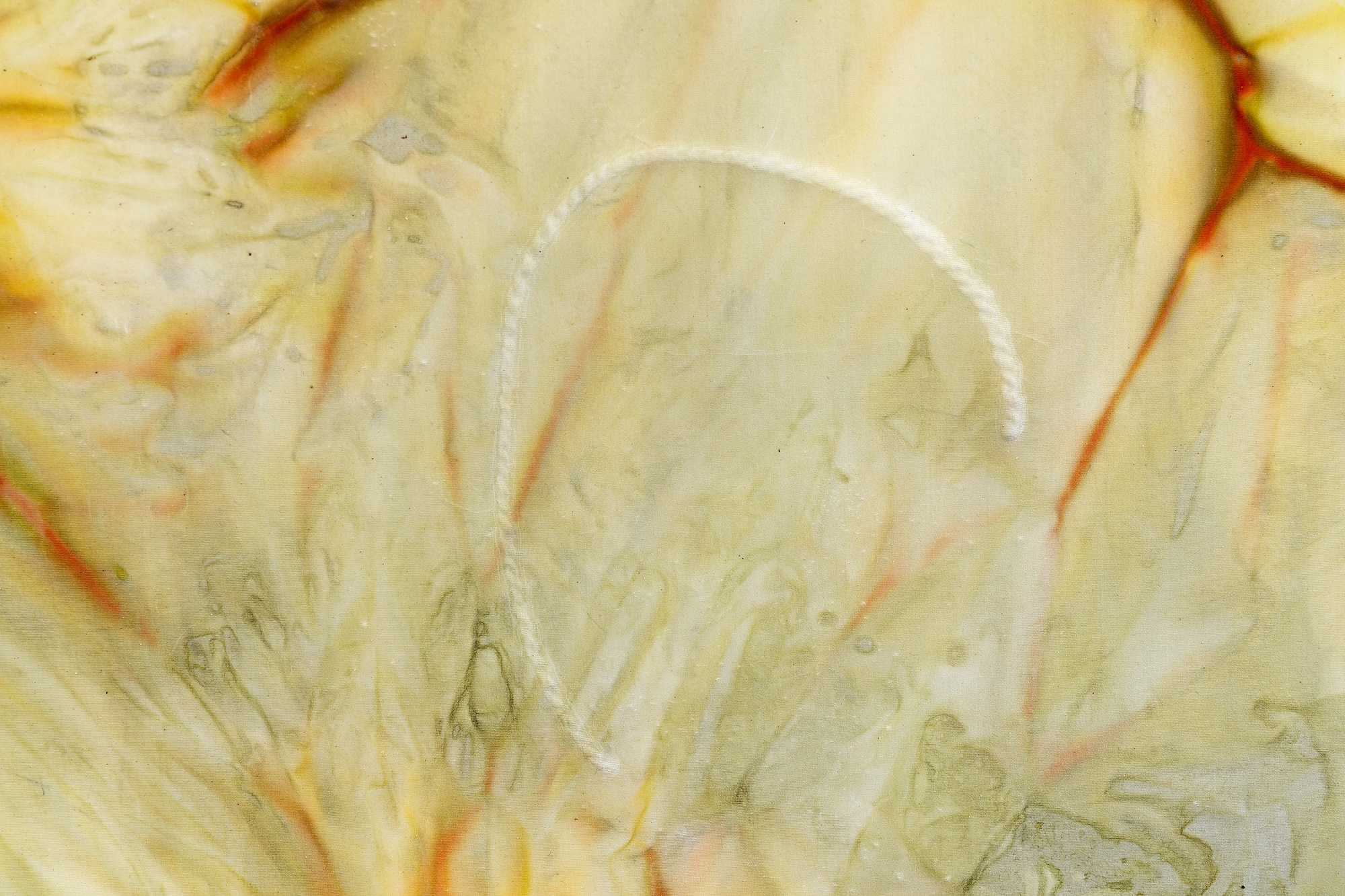
Alex Hojenski’s large-format paintings are typically created horizontally, deploying functional textiles drawn from contexts far removed from the realm of painting. Through the mixing and layering of various materials and the distribution of differently pigmented water forms emerge during a lengthy drying process that are at once photogram-like and abstract. A key element of this practice is the awaiting of the process’s outcome, as well as an engagement with the concept of anti-form. The specific shapes that materialize during Hojenski’s painting process are influenced by the materials themselves—specifically, whether they absorb or repel liquids, how they interact with one another, and the permeability of the respective fabrics. Hojenski deliberately engages with themes of chaos and smutch, addressing the question of why these elements are so often portrayed as unsettling and why there is a persistent impulse to eliminate them in favor of a supposedly stable state.
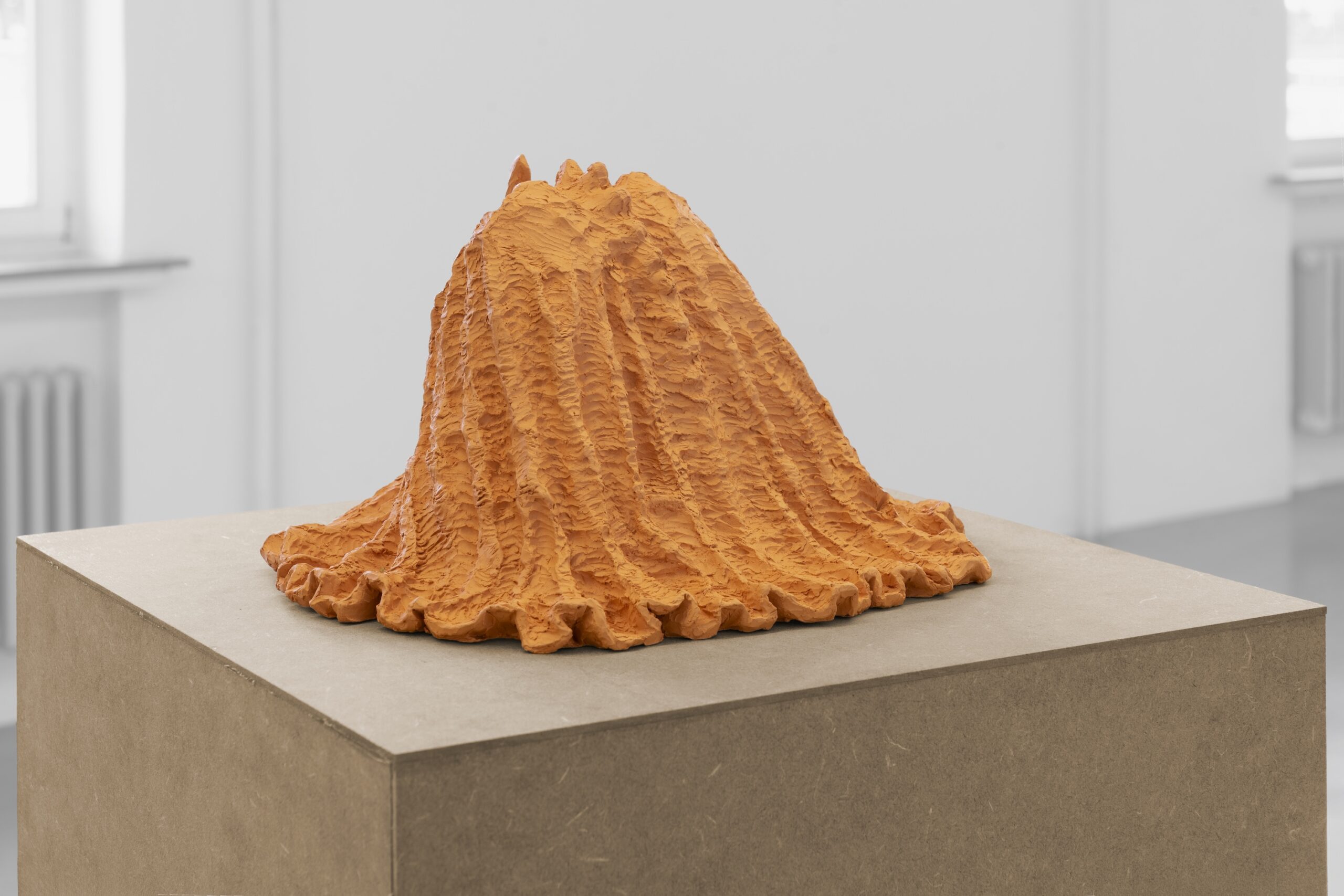
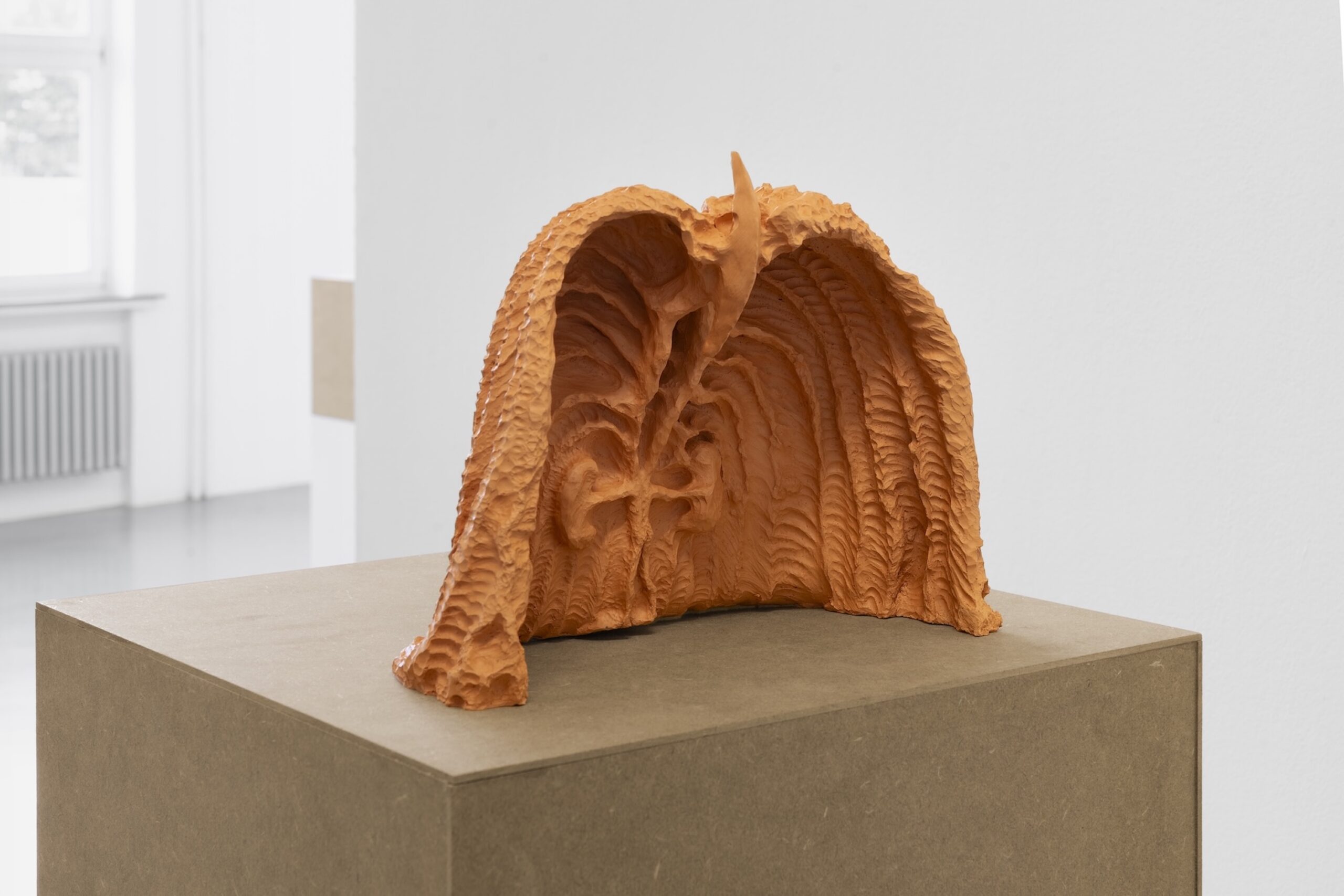
Beth Collar, whose practice includes sculpture, drawing, video, and performance, has produced cloaked figures out of clay. Carved and squished they hover between cavity and cover, creating different postures and possible narrations. The title they share is Misericordia thus referencing notions of protection as well as virtue. Each of them follows, dissolves, and transforms a different aspect though conflating their starting points, which range from Medieval sculpture to the representation of a sad and lonely dinosaur, into one specific form. Within each sculpture Collar draws unfixed relations between their inside and outside, their dissolution and formation as well as the viewer. The four miniature sculptures that are reminiscent of maquettes have been elevated so they may stare at, withdraw or shrink from their onlooking counterpart.
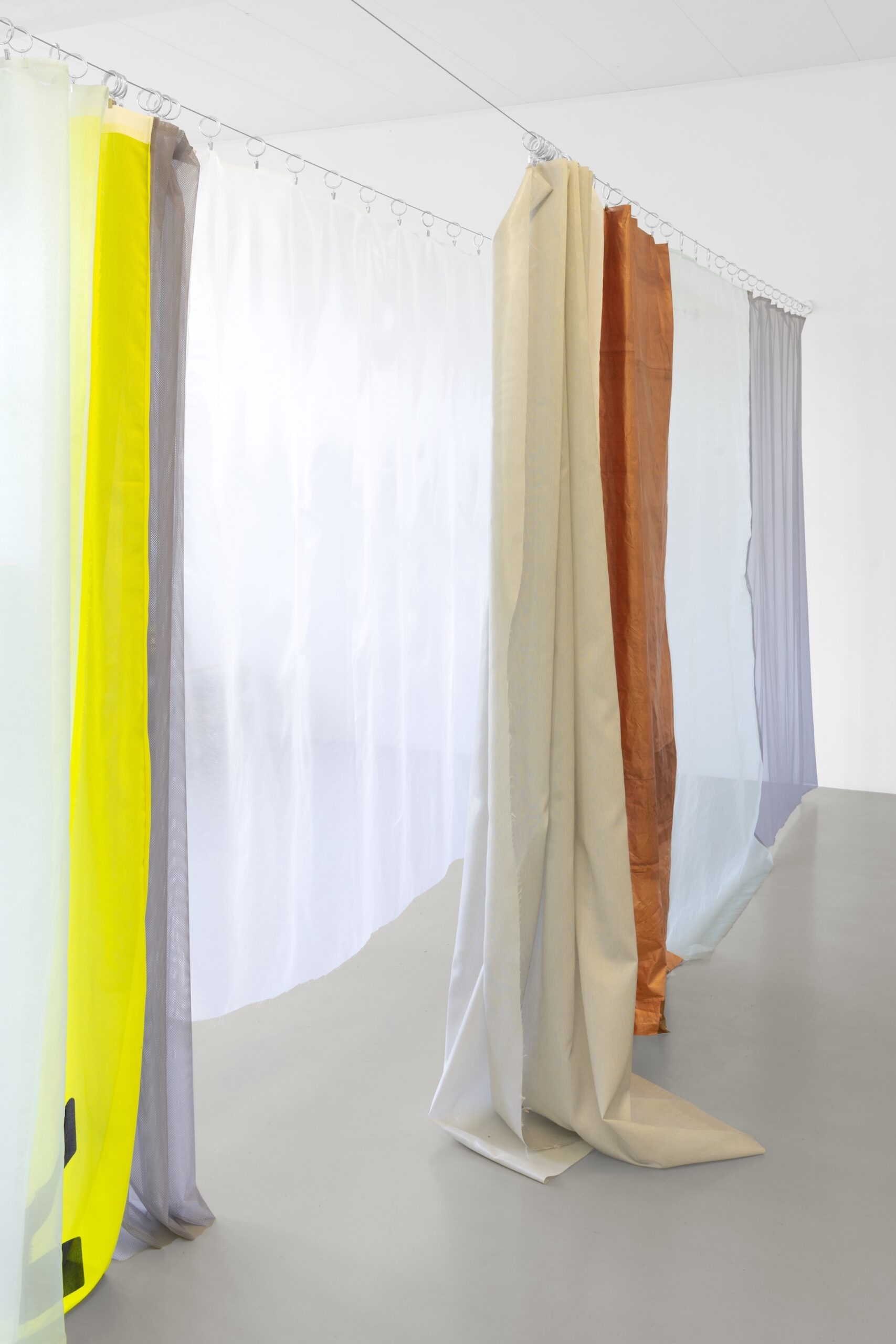
The workshop Umhaut, led by Harm Coordes and Luisa Recker, invites participants to establish a connection with both themselves and their urban surroundings through the act of creating clothing—or outfits. To facilitate this, the fashion designers have constructed a corridor formed by two curtains. Workshop participants cut their materials directly from these curtains; they then patch the resulting void with a different fabric, thereby gradually creating a patchwork quilt of diverse needs and preferences. In its physical form, the corridor itself may evoke Bruce Nauman’s 1970 Performance Corridor and, by extension, the questions Nauman also raised regarding the relationship between the body, posture, and environment.
Jashua Bustos Chumasero with his Reading Session format We speak because we listen addresses the ear as a membrane. Through a series of pop-up events, Chumasero invites artists to read poetic texts—whether their own or those of others—and embeds these readings within a carefully crafted acoustic environment. Through various reading and performance techniques, as well as musical accompaniment, the Reading Sessions propose diverse modes of listening, allowing for resonance, processing, and focusing. The invited artists—and the words they bring with them—address, each in their own individual way, the theme of the membrane, the boundary, or the act of drawing boundaries.
Events
Fri, 22.05., 19:00
Opening
Sat, 30.05., 20:00 & 22:00
We speak because we listen – acoustic reading with Julija Paškevičiūtė and Hodan-Ali Fahrah
as part of Lange Nacht der Museen Bremen
02.–25.06.
Workshop Umhaut
with fashion designers Harm Coordes & Luisa Recker
Thu, 04.06., 18:00
Guided tour
Thu, 25.06. 20:30
fashion show Umhaut
im Rahmen von Three’s a party, gemeinsames Sommerfest von GAK, Künstler:innenhaus & Museum Weserburg
Thu, 30.07. 19:00
We speak because we listen
Thu, 06.08., 18:00
Guided tour
Funding
Der Senator für Kultur der Freien Hansestadt Bremen, Harry und Brigitte Bornemann-Stiftung, VGH Stiftung, Sparkasse Bremen