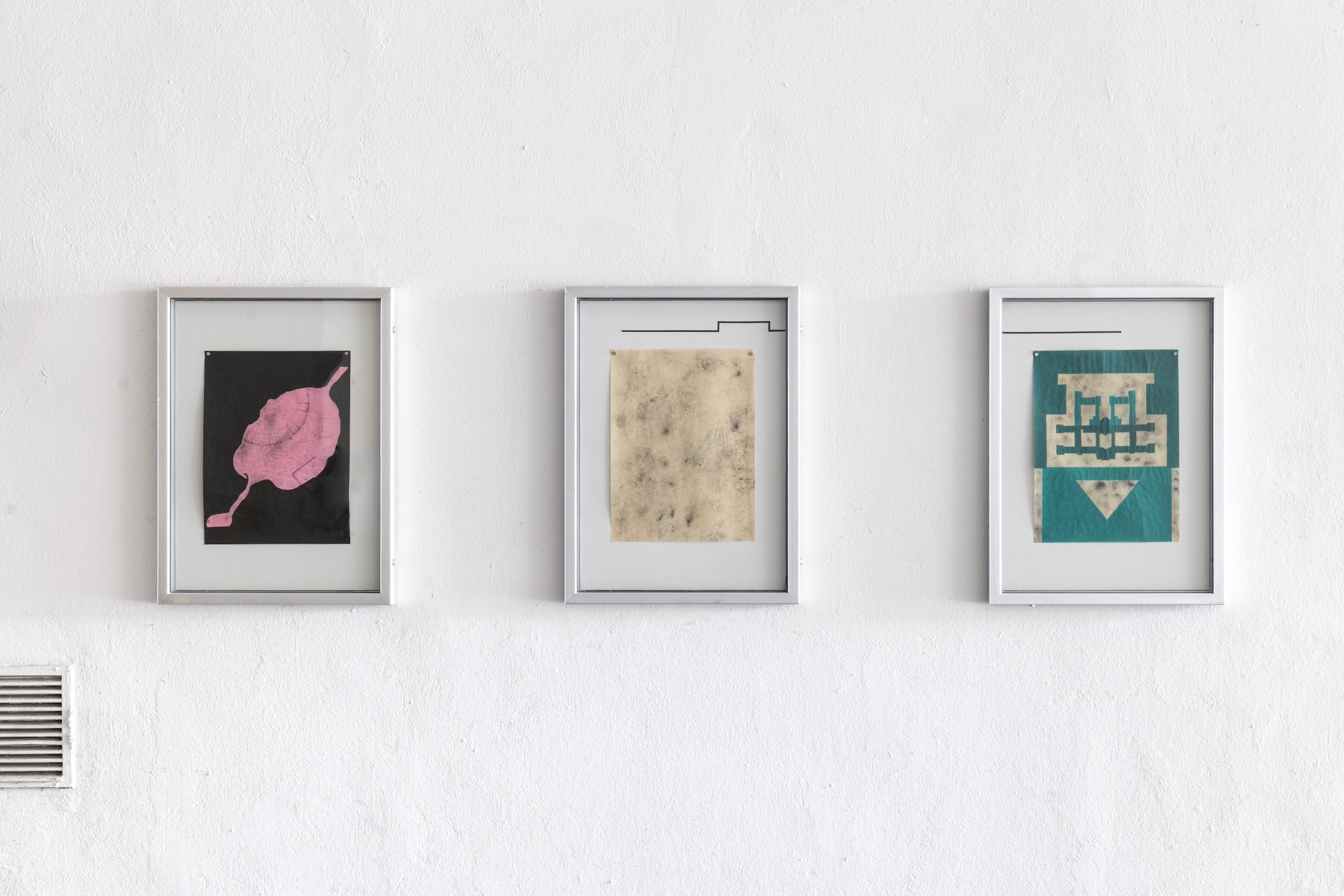
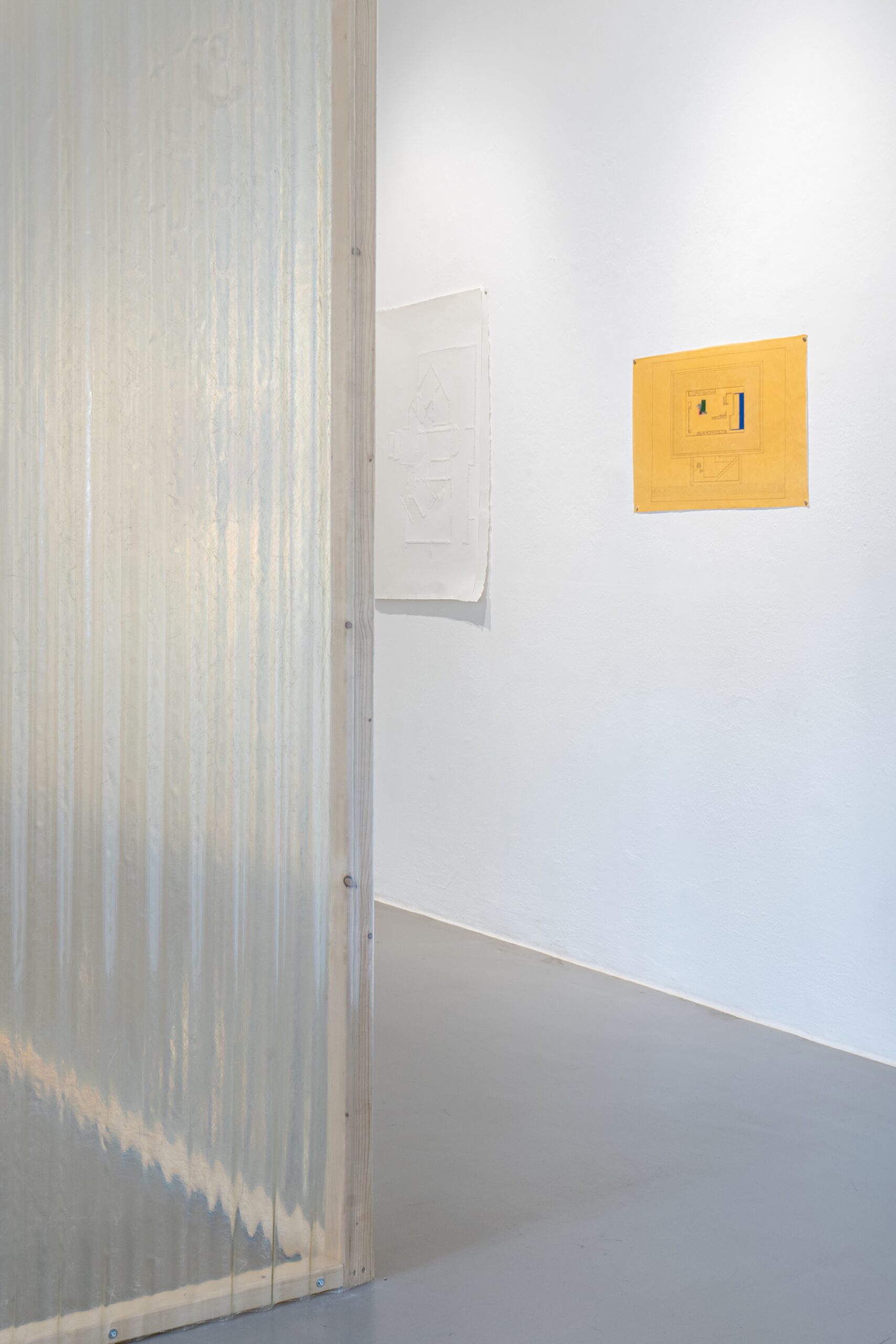
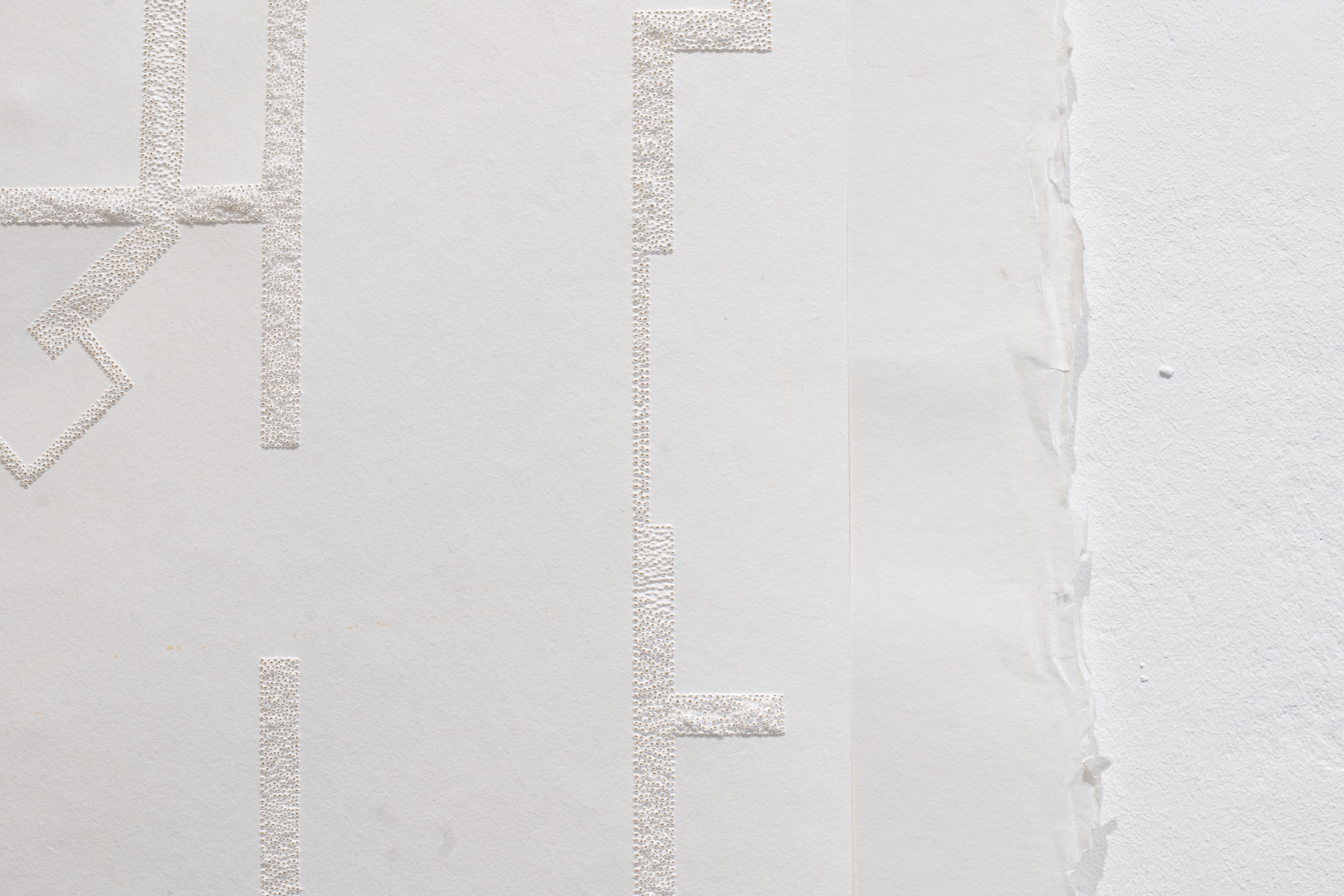
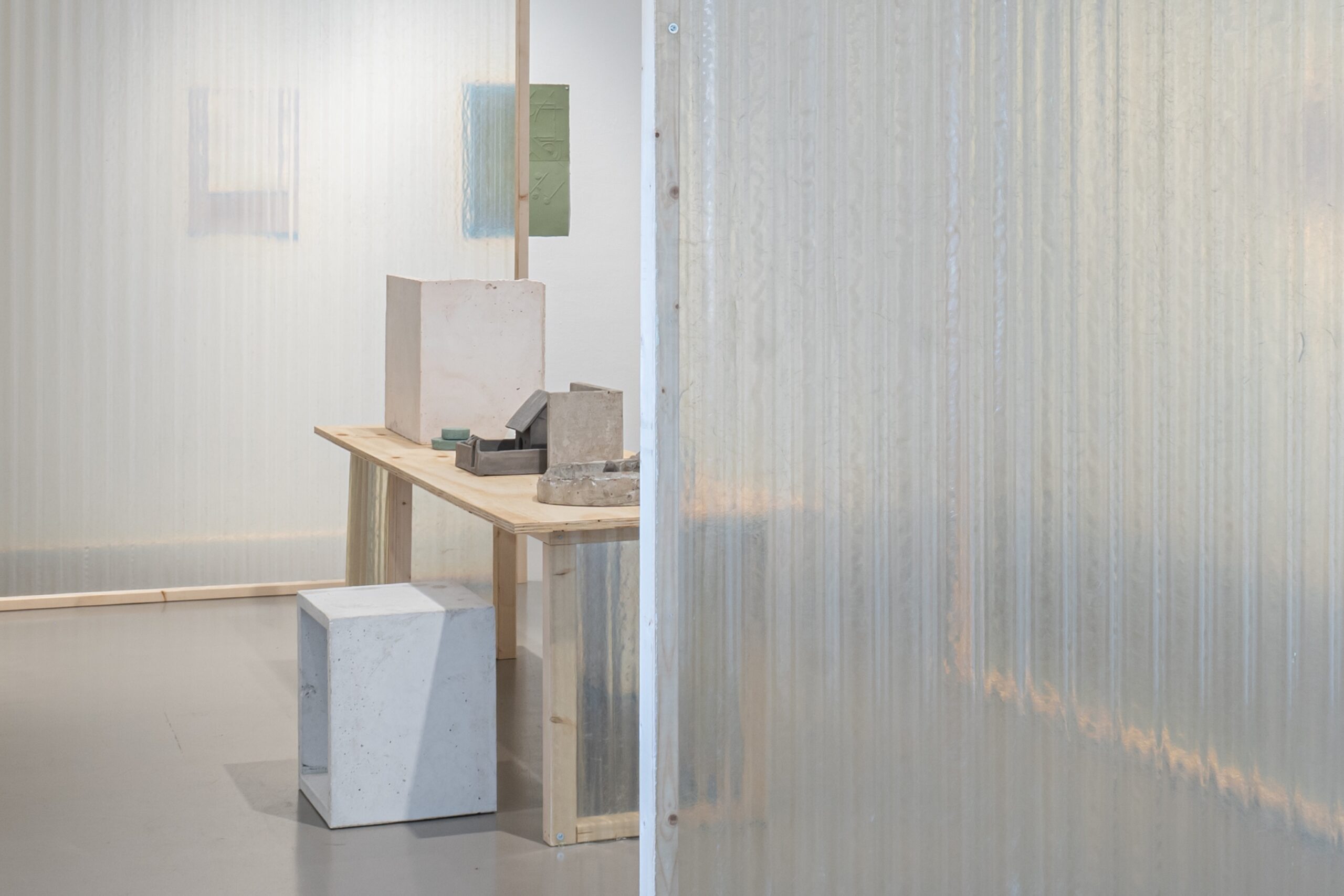
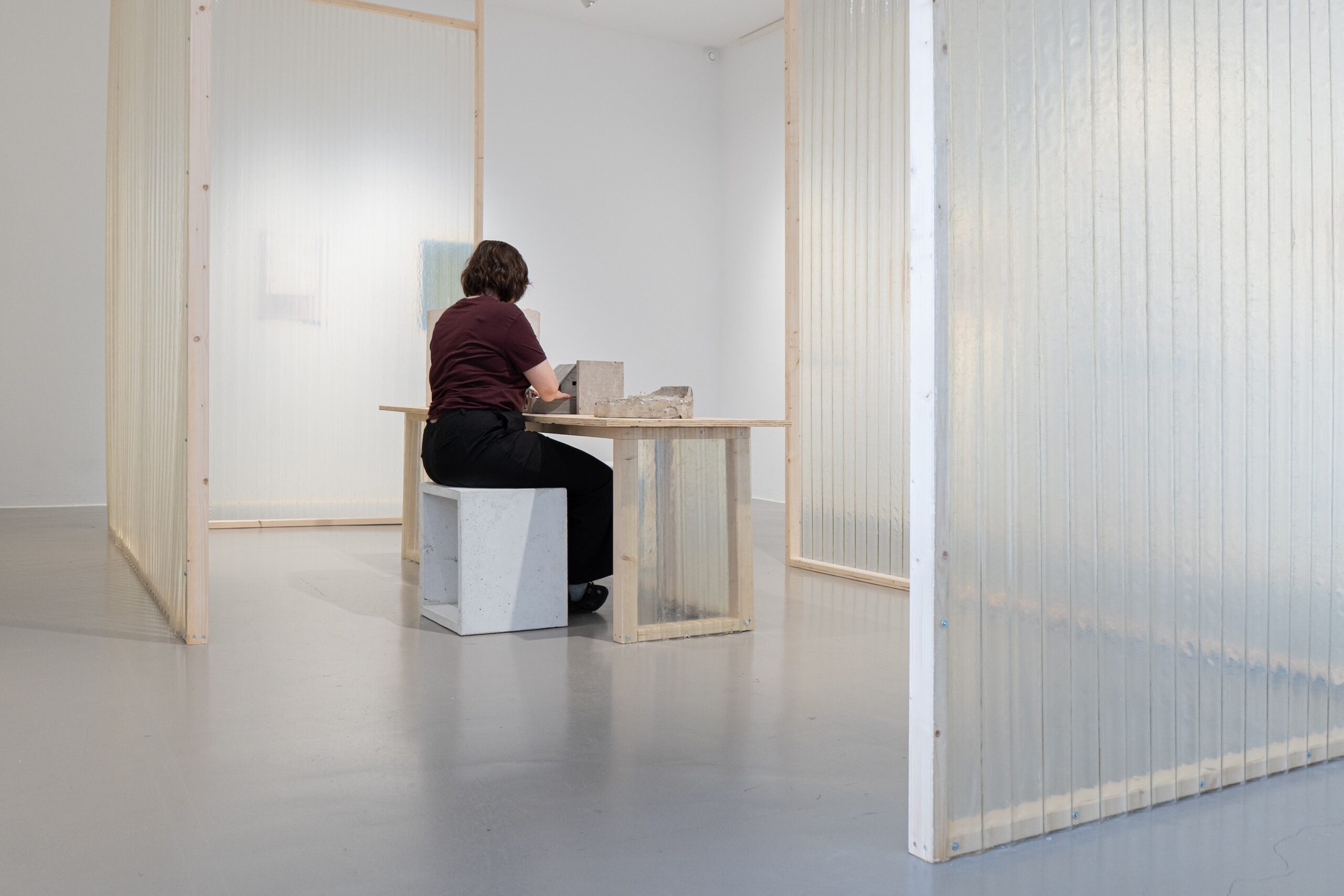
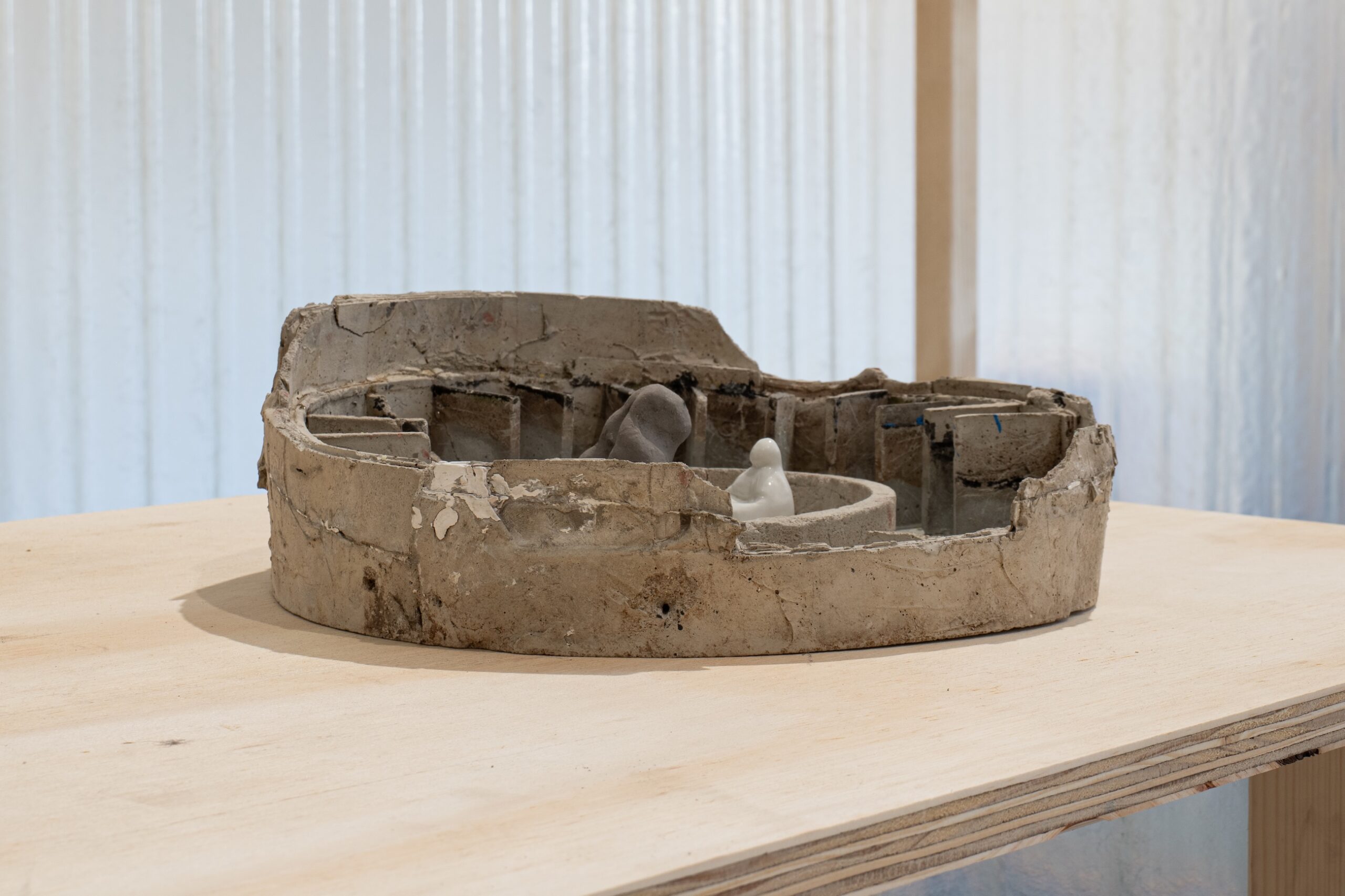
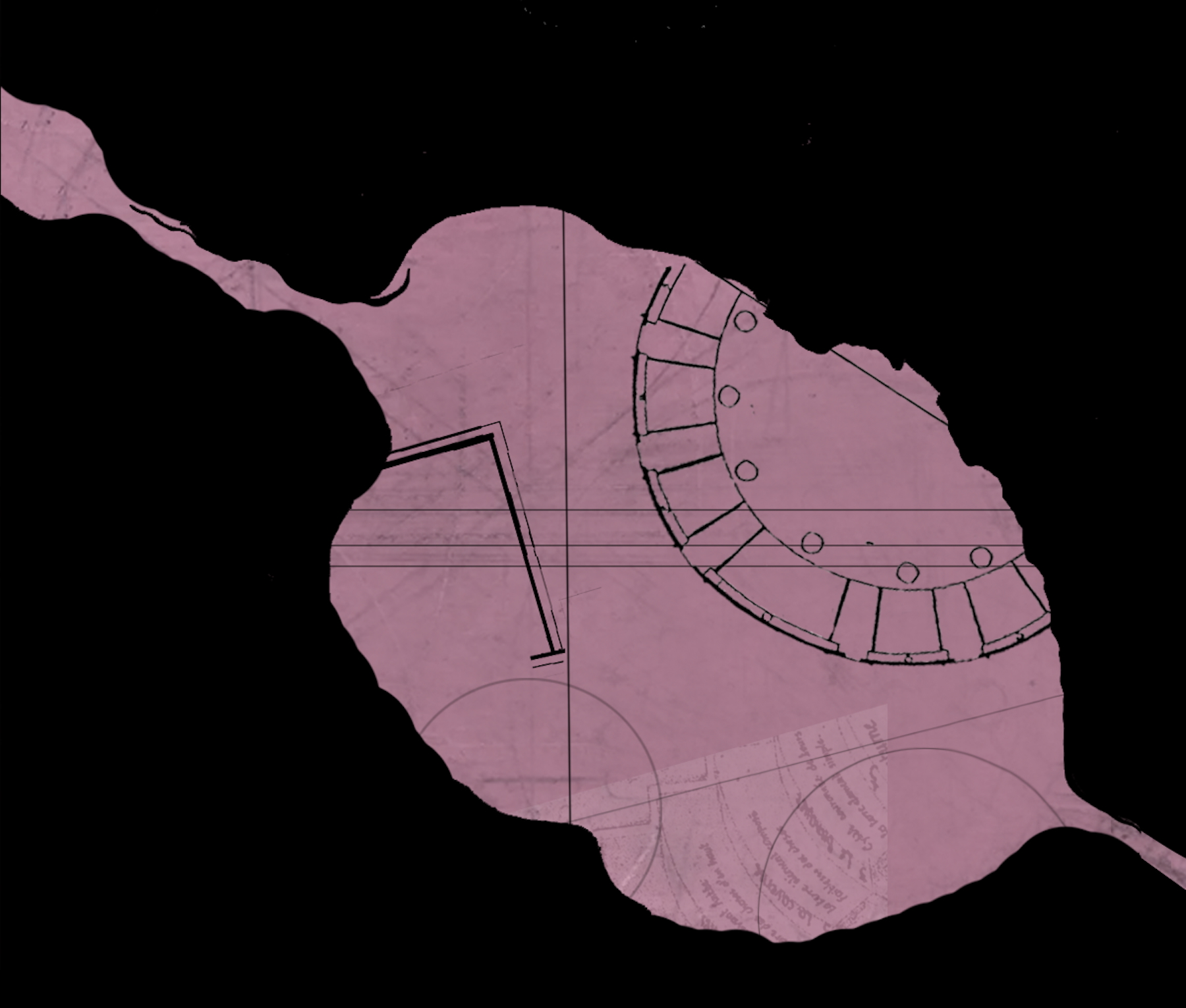
We cordially invite you to manipulated fragments by Julia Horstmann, the sixth and final exhibition in the series for fear of continuity problems, which explores the notion of memory across parts of GAK’s indoor space and in the poster frames outside.
Horstmann examines the social and societal conditions—even utopias—that both design and are designed by architecture. A material, a line of sight, or the seemingly abstract lines of an architectural drawing reveal much about the underlying social beliefs and orders that are reflected in the design of spaces. They have concrete effects on the life that takes place within them, although their origin and development often remain invisible. At the same time, the design of a space has an immediate and real impact—on social roles, on acts of inclusion and exclusion, on producing fear.
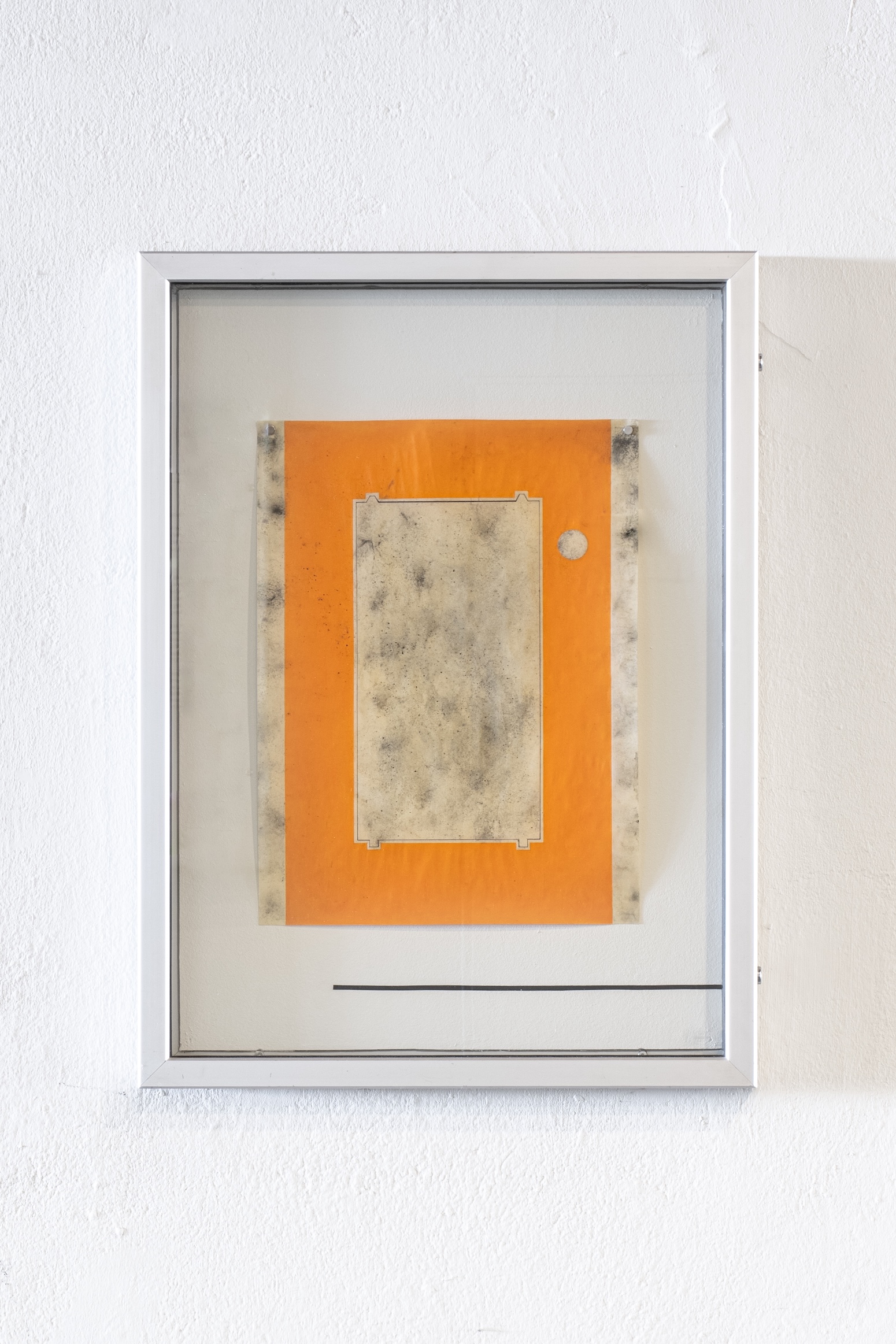
For the poster frames, Horstmann presents drawings and collages that bring together psychiatric institution floor plans from the past three hundred years, in which evolving concepts of surveillance, treatment, and presentation intersect. The walls, visible as lines and openings on the plans, describe the negotiation between the boundaries of retreat and exclusion as well as the control of contact zones. Today, this tension is increasingly extending to the boundary between real and imaginary spaces and the contact with AI.
Inside the GAK, the artist has developed a scenario of both historical and contemporary orientation that navigates between remembrance and forgetting. It again draws on building floor plans and is based on the memory theater, a mnemonic technique in which memories are linked to rooms and the objects within them. This space can then be mentally traversed to bring the memories to mind. Horstmann draws on the theater—to acting and bringing things to life—and the potential of how a memory changes every time one actively remembers, in order to question old associations and propose new relations.
Opening: 10.07.2026, 19:00
The series for fear of continuity problems invites artists to play a game of ping-pong between the small bookshop at the GAK and the question of how memory, perspectives, narratives, identities, and the unconscious can be spatially represented and publicly negotiated. Julia Horstmann has designed a new bookshelf for the collaborative project For the project the book selection has been expanded by Hopscotch Reading Room as well as the participating artists.
Funded by
Der Senator für Kultur der Freien Hansestadt Bremen, Liebelt Stiftung Hamburg, Waldemar Koch Stiftung, Sparkasse Bremen